
Animals & Environment
Ancient Crocodiles Walked on Two Legs
6 Jun 2026
NEW
Select
a Level
Warm-up → Read & Listen → Check Understanding → Language → Use It
WARM UP
Think Ahead: Which detail do you think appears in this story?
a) A small ancient crocodile walked on two legs.
b) Crocodiles used to fly in the sky like birds.
c) Modern crocodiles have sharp bird beaks.
Ask: (1) Do you like crocodiles? (2) What is your favourite animal?
VOCABULARY
ancient (adj)
/ˈeɪnʃənt/
crocodile (n)
/ˈkrɒkədaɪl/
strange (adj)
/streɪndʒ/
beak (n)
/biːk/
hollow (n)
/ˈhɒləʊ/
fossil (n)
/ˈfɒsl/
Very old; from a long time ago.
Example: Scientists found an ancient bone in the ground.
A large reptile with a long body, thick skin, and sharp teeth that lives near water.
Example: The green crocodile swam quietly in the river.
Unusual, surprising, or difficult to understand.
Example: The animal looked strange because it had no teeth.
The hard, pointed mouth of a bird.
Example: The bird used its sharp beak to eat a small seed.
Having an empty space or hole inside.
Example: Bird bones are hollow so they can fly easily.
The hard remains of an animal or plant that lived a very long time ago.
Example: The museum has a huge dinosaur fossil.
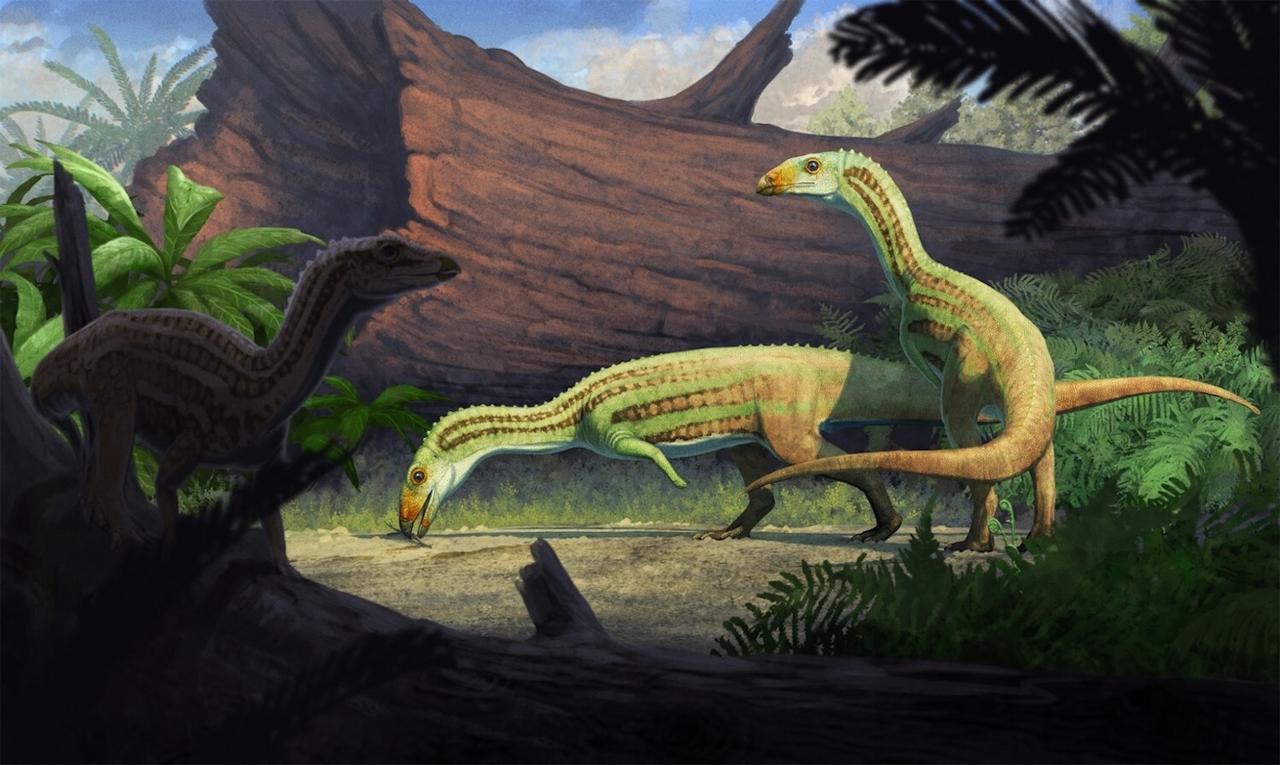
Scientists discovered a very ancient animal in America. This reptile lived 215 million years ago. It was an old cousin of the modern crocodile. However, this animal looked very strange. It did not walk on four legs like today's crocodiles. Instead, it walked upright on two long legs. It was about 60 centimetres tall, which is the same size as a small dog.
This creature did not have any sharp teeth. It had a hard beak to eat its food. It also had very light, hollow bones. This helped the animal run quickly through the forests. Scientists found many bones of this animal in the ground. They are studying the old fossil remains to learn more about nature. It proves that the history of our world is full of amazing surprises.
Listen

DISCUSSION QUESTIONS
1. Do you like learning about ancient animals? Why or why not?
2. How is this ancient crocodile different from crocodiles today?
3. Why do you think this animal needed to run fast in the forest?
4. What would you do if you found an old fossil in your garden?
5. Why do you think scientists study old animal bones?
6. Imagine this animal was alive today. Do you think it would make a good pet?
FILL IN THE GAPS
1: Fill in the Gaps
Word Bank: ancient, crocodile, beak, fossil
Scientists discovered a very _______(1) animal in America. This reptile lived 215 million years ago. It was an old cousin of the modern _______(2). However, this animal looked very strange. It did not walk on four legs like today's crocodiles. Instead, it walked upright on two long legs. It was about 60 centimetres tall, which is the same size as a small dog.
This creature did not have any sharp teeth. It had a hard _______(3) to eat its food. It also had very light, hollow bones. This helped the animal run quickly through the forests. Scientists found many bones of this animal in the ground. They are studying the old _______(4) remains to learn more about nature. It proves that the history of our world is full of amazing surprises.
2: Main Idea
Choose the best summary of the article.
a) Modern crocodiles are slowly changing into forest birds.
b) Scientists found an old crocodile cousin that walked on two legs and had a beak.
c) Ancient pet dogs were the same size as small green reptiles.
UNDERSTANDING
3: True or False
1. The ancient animal lived 215 million years ago. T/F
2. This animal had a big mouth full of sharp teeth. T/F
3. Scientists found only ten bones of this animal under the ground. T/F
4: Put Events in Order
Put these sentences in the correct order from 1 to 3.
_______ The ancient animal lived and ran through the green forests 215 million years ago.
_______ Scientists dug in the ground and found more than 900 bones of the creature.
_______ Experts started studying the fossil remains to learn secrets about ancient nature.
LANGUAGE
5: Match the Vocabulary Words
1. ancient
2. crocodile
3. beak
4. hollow
a) a hard, pointed mouth of a bird
b) very old; from a long time ago
c) having an empty space or hole inside
d) a large reptile that lives near water
USE IT
6: Discussion Builder
1. If I saw an ancient two-legged crocodile in a forest, I would feel _______
a) scared because it could run very fast
b) happy because it looks small and silly
c) interested to see its hard beak
2. Learning about old fossil bones makes me think about _______
a) how different animals change over a long time
b) what my modern pet dog likes to eat for dinner
c) why most trees in the forest are green
7: Sentence Unscramble
Put the words in the correct order.
1. A) animal B) ancient C) lived D) this E) long ago
2. A) had B) a hard C) beak D) it E) to eat
ANSWER KEY
Section 1: Fill in the Gaps
1. ancient
2. crocodile
3. beak
4. fossil
Section 2: Main Idea
Correct answer: b
Section 3: True or False
1. True
2. False
3. False
Section 4: Put Events in Order
1, 2, 3
Section 5: Vocab Match
1 - b
2 - d
3 - a
4 - c
Section 6: Discussion Builder
Student's own choice.
Section 7: Sentence Unscramble
1. D, B, A, C, E
(This ancient animal lived long ago.)
2. D, A, B, C, E
(It had a hard beak to eat.)