

Animals & Environment
Select a Level
NEW
22 Oct 2026
A ‘Lost Kitten’ Turns Out to Be a Brand-New Wild Cat!
Warm-up → Read & Listen → Check Understanding → Language → Use It
WARM UP
Section: Warm Up
Think Ahead: Which detail do you think appears in this story?
a) The kitten eats noodles and rice.
b) The kitten lives in a big city zoo.
c) The kitten has stripes like a tiger.
Ask:
(1) Do you have a pet? What does it eat?
(2) What wild animals do you know?
VOCABULARY
kitten (/ˈkɪt.ən/, noun)
Meaning: A baby cat.
Example: My friend has a little grey kitten.
spots (/spɒts/, noun)
Meaning: Small round marks on fur or skin.
Example: A ladybird has black spots on its back.
forest (/ˈfɒr.ɪst/, noun)
Meaning: A big place with lots of trees.
Example: We walk in the forest with my dad.
wild (/waɪld/, adjective)
Meaning: Living in nature, not with people.
Example: Lions are wild animals.
scientist (/ˈsaɪ.ən.tɪst/, noun)
Meaning: A person who studies the world to learn new things.
Example: The scientist is looking at a leaf.
different (/ˈdɪf.ər.ənt/, adjective)
Meaning: Not the same.
Example: My shoes are different colours today!
camera (/ˈkæm.rə/, noun)
Meaning: A machine that takes photos or videos.
Example: I take a photo of my cat with a camera.
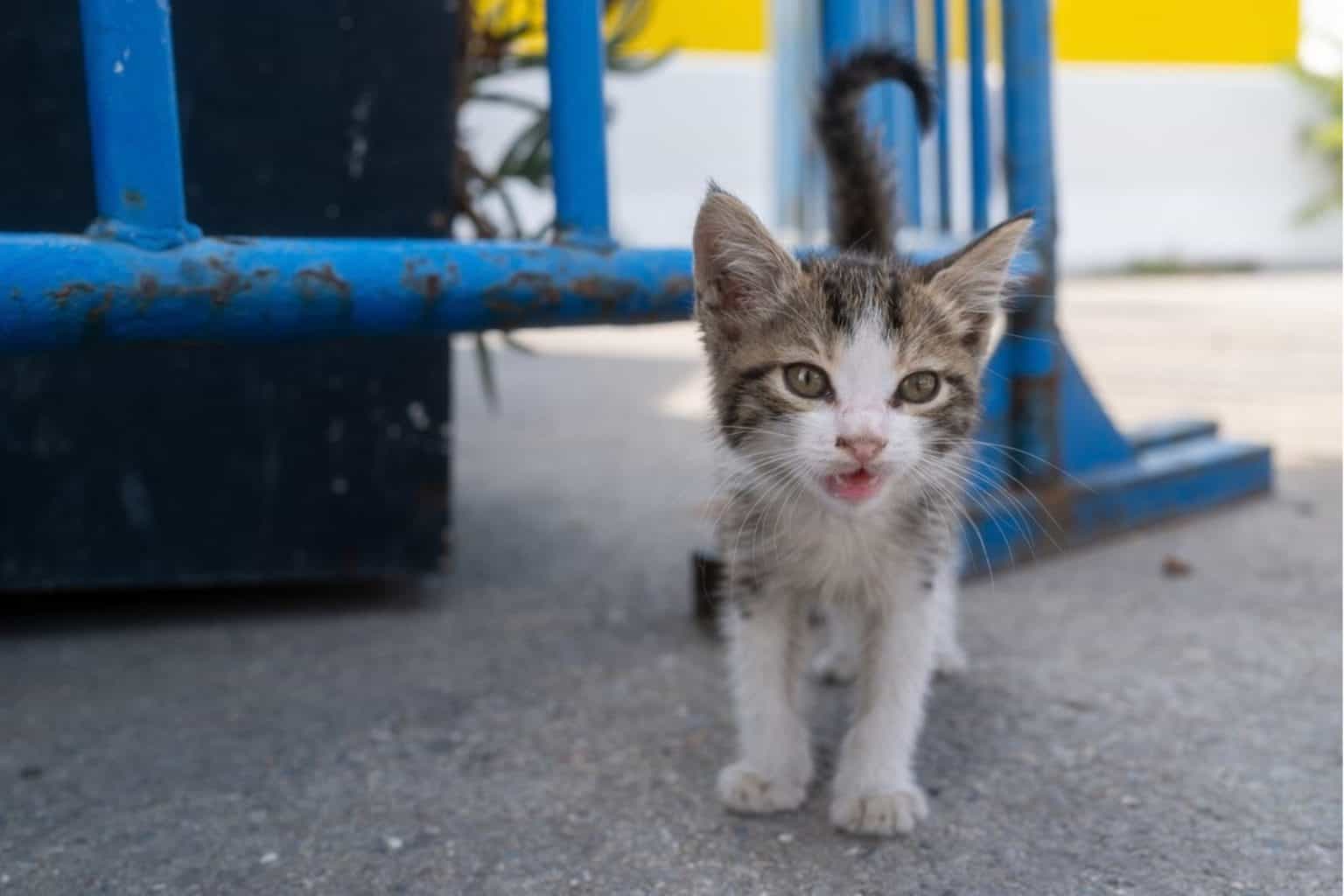
A man lives in a forest in Bolivia. One day, he finds a small kitten. The kitten has spots on its fur. The man takes the kitten home. He gives it noodles, rice and eggs. He thinks it is a lost pet.
But the kitten is not a pet. It is a wild animal! The man takes the cat to an animal home. A scientist works there. She looks at the cat. She thinks, ‘This cat is different!’
Scientists study the cat’s DNA. DNA is like a secret code in our bodies. The code tells them something big. This cat is a new kind of cat! It is the first new cat in over 100 years.
Its name is the tilcayo. It is smaller than a pet cat. It has big spots on its body. It lives in a green, cloudy forest. Now the scientist is putting cameras in the forest. She is looking for more tilcayos!

DISCUSSION QUESTIONS
Section 8: Discussion Questions
(1) What does the man give the kitten to eat?
(2) Why does the man take the cat to an animal home?
(3) What colour do you think the tilcayo is?
(4) Do you want a wild cat as a pet? Why or why not?
(5) What animal do you want to find in a forest?
FILL IN THE GAPS
FILL THE GAPS
Section 1: Fill in the Gaps
Word Bank: scientist | wild | kitten | spots
A man lives in a forest in Bolivia. One day, he finds a small _______(1). The kitten has _______(2) on its fur. The man takes the kitten home. He gives it noodles, rice and eggs. He thinks it is a lost pet.
But the kitten is not a pet. It is a _______(3) animal! The man takes the cat to an animal home. A _______(4) works there. She looks at the cat. She thinks, ‘This cat is different!’
Scientists study the cat’s DNA. DNA is like a secret code in our bodies. The code tells them something big. This cat is a new kind of cat! It is the first new cat in over 100 years.
Its name is the tilcayo. It is smaller than a pet cat. It has big spots on its body. It lives in a green, cloudy forest. Now the scientist is putting cameras in the forest. She is looking for more tilcayos!
Section 2: Main Idea
What is the main idea of the story?
a) A man buys a new pet cat in a shop.
b) A lost kitten is really a new kind of wild cat.
c) Scientists find a big cat in the snow.
UNDERSTANDING
Section 3: True or False
(1) The man gives the kitten noodles, rice and eggs. T/F
(2) The kitten is a pet cat. T/F
(3) The tilcayo is bigger than a pet cat. T/F
Section 4: Put Events in Order
Number the events from 1 to 3.
____ a) Scientists study the cat’s DNA.
____ b) A man finds a small kitten in the forest.
____ c) The man takes the cat to an animal home.
LANGUAGE
Section 5: Vocab Match
(1) kitten
(2) forest
(3) wild
(4) scientist
(5) camera
a) A machine that takes photos.
b) A baby cat.
c) A person who studies the world and asks questions.
d) A big place with lots of trees.
e) Not a pet; it lives in nature.
USE IT
Section 6: Discussion Builder
(1) I like the tilcayo because it ________ small and spotty.
a) is b) are c) am
(2) I want to ________ a tilcayo in the forest.
a) sees b) see c) seeing
Section 7: Sentence Unscramble
(1) A) a small / B) The man / C) kitten / D) finds / E) in the forest.
(2) A) is / B) The tilcayo / C) cat. / D) a new / E) wild
ANSWER KEY
Warm Up
a) The kitten eats noodles and rice.
Section 1: Fill in the Gaps
(1) kitten
(2) spots
(3) wild
(4) scientist
Section 2: Main Idea
b) A lost kitten is really a new kind of wild cat.
Section 3: True or False
(1) True
(2) False – it is a wild animal.
(3) False – it is smaller than a pet cat.
Section 4: Put Events in Order
1 – b) A man finds a small kitten in the forest. 2 – c) The man takes the cat to an animal home. 3 – a) Scientists study the cat’s DNA.
Section 5: Vocab Match
1 – b, 2 – d, 3 – e, 4 – c, 5 – a
Section 6: Discussion Builder
(1) a) is
(2) b) see
Section 7: Sentence Unscramble
(1) B – D – A – C – E: The man finds a small kitten in the forest.
(2) B – A – D – E – C: The tilcayo is a new wild cat.
Section 8: Discussion Questions
Answers will vary. Model answers: (1) He gives it noodles, rice and eggs. (2) Because it is a wild animal, not a pet. (3)–(5) Accept any answer in a full sentence.

Thank you for your feedback!