

World, Sports & Travel
Select a Level
NEW
29 Aug 2026
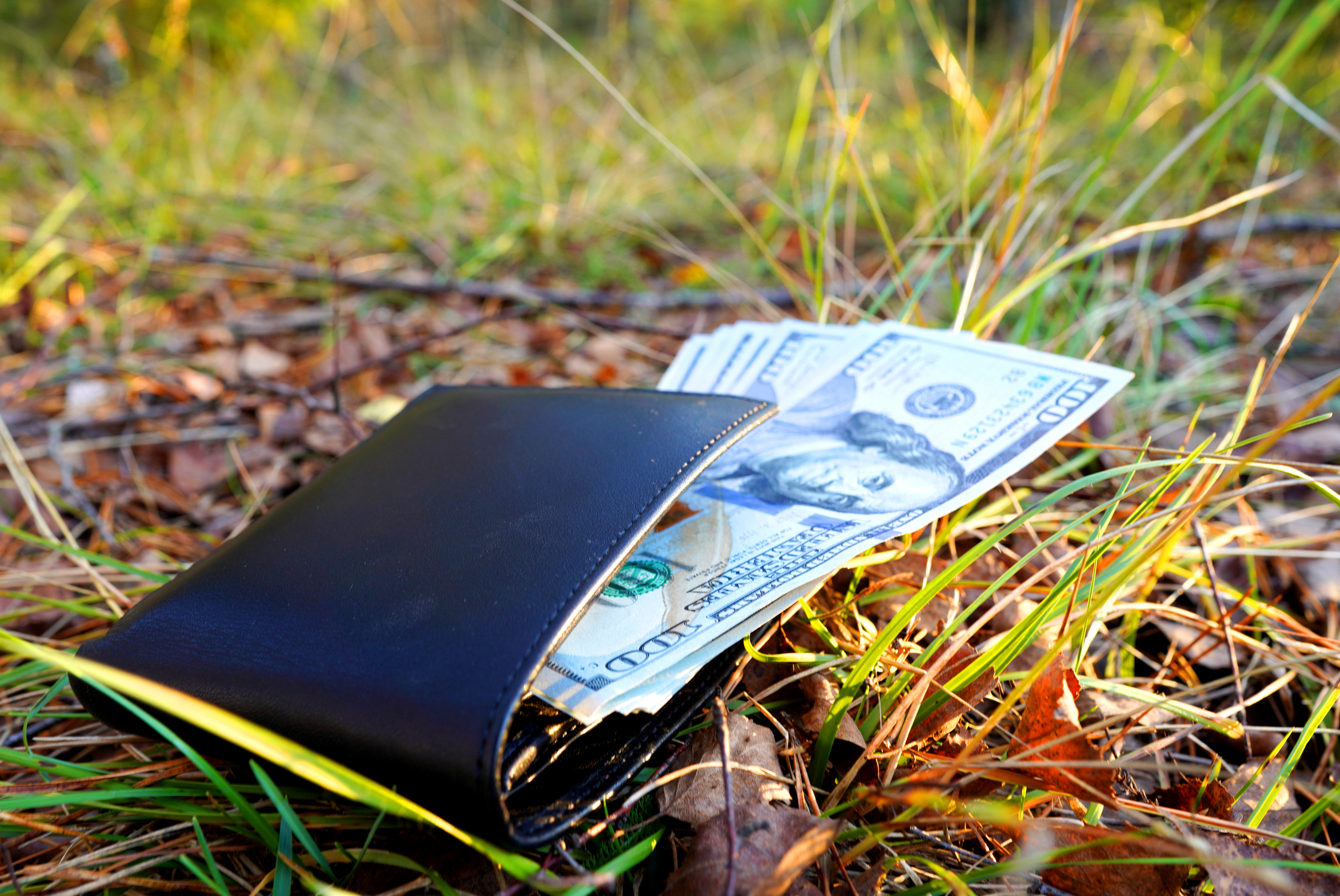
When researchers handed in ‘lost’ wallets, not all of them were returned to their supposed owners – and it mattered how much money was inside - Image credit: Getty Images
Global Study Ranks Most Honest Countries using Lost Wallets
Warm-up → Read & Listen → Check Understanding → Language → Use It
WARM UP
Think Ahead: Which detail do you think appears in this story?
a) Scientists dropped lost wallets in different countries.
b) Scientists left lost backpacks on buses.
c) Scientists gave free wallets to school children.
Ask:
(1) Have you ever found a lost item in a public place?
(2) Why is it important to return lost things to their owners?
VOCABULARY
wallet (/ˈwɒl.ɪt/, noun)
Meaning: A small, flat folding case for carrying paper money and cards.
Example: Tom put his bus ticket inside his new wallet.
experiment (/ɪkˈsper.ɪ.mənt/, noun)
Meaning: A scientific test done to find out how something works.
Example: The class did an experiment with water and salt.
honest (/ˈɒn.ɪst/, adjective)
Meaning: Telling the truth and doing what is right and fair.
Example: An honest girl returned the lost toy to her friend.
return (/rɪˈtɜːn/, verb)
Meaning: To give or bring something back to its owner.
Example: Please return the book to the library tomorrow.
empty (/ˈemp.ti/, adjective)
Meaning: Containing nothing inside.
Example: The box was empty after we ate all the apples.
cash (/kæʃ/, noun)
Meaning: Money in the form of notes and coins.
Example: Maya used her cash to buy a cold drink.
owner (/ˈəʊ.nə/, noun)
Meaning: The person that something belongs to.
Example: The dog barked happily when its owner came home.
Scientists do an important experiment about honesty. They visit forty different countries around the world. The scientists leave thousands of lost wallets inside public buildings. They place the wallets in hotels, banks, and busy post offices.
Every single wallet contains a basic shopping list, a small key, and a clear email address. Some wallets contain money inside them. Other wallets are completely empty.
The workers inside the buildings find the lost wallets. Do they try to contact the owners?
The final results are very interesting. In Switzerland, Norway, and the Netherlands, workers return most of the wallets. People in these peaceful countries act very honestly.
The scientists also discover something surprising. Wallets containing a large sum of money are returned more often than empty wallets. People feel bad if they keep lots of money. They prefer to help the rightful owner get their items back safely. This study shows that many people around the world choose kindness every day.


Residents of Switzerland were most likely to return the wallets to their owners, and so were crowned the most honest country included in the study - Credit: Getty
DISCUSSION QUESTIONS
(1) What would you do if you found a lost wallet on the street?
(2) Why do you think people returned wallets with money more often?
(3) Which country in the study returned the most wallets?
(4) How can we help people in our school be more honest?
(5) Why is it helpful to have an email address inside a lost wallet?
FILL IN THE GAPS
FILL THE GAPS
Section 1: Fill in the Gaps
Word Bank: cash, experiment, return, wallets
Scientists do an important _______(1) about honesty. They visit forty different countries around the world. The scientists leave thousands of lost _______(2) inside public buildings. They place the wallets in hotels, banks, and busy post offices.
Every single wallet contains a basic shopping list, a small key, and a clear email address. Some wallets contain money inside them. Other wallets are completely empty.
The workers inside the buildings find the lost wallets. Do they try to contact the owners?
The final results are very interesting. In Switzerland, Norway, and the Netherlands, workers _______(3) most of the wallets. People in these peaceful countries act very honestly.
The scientists also discover something surprising. Wallets containing a large sum of _______(4) are returned more often than empty wallets. People feel bad if they keep lots of money. They prefer to help the rightful owner get their items back safely. This study shows that many people around the world choose kindness every day.
Section 2: Main Idea
What is the main idea of this article?
a) Scientists taught animals how to carry wallets safely.
b) A global study showed how people in different countries return lost wallets.
c) Post offices are the only places where lost items are kept.
UNDERSTANDING
Section 3: True and False
(1) Scientists visited forty different countries for the experiment. T/F
(2) Empty wallets were returned more often than wallets with money. T/F
(3) Workers in Switzerland returned most of the lost wallets. T/F
Section 4: Put Events in Order
Put the following events in the correct order (1-3):
( ) Workers inside the buildings find the lost wallets.
( ) Scientists place lost wallets in public buildings around the world.
( ) Scientists collect the results to see which countries returned wallets.
LANGUAGE
Section 5: Vocab Match
(1) wallet
(2) honest
(3) return
(4) empty
(5) cash
a) Containing nothing inside
b) Money in the form of paper notes and coins
c) A small case used for carrying money and cards
d) Doing what is right, truthful, and fair
e) To give something back to its rightful owner
USE IT
Section 6: Discussion Builder
(1) If I find a lost key in class, I should _______ it to the teacher.
a) return
b) hide
(2) An _______ person always tells the truth to their friends.
a) empty
b) honest
Section 7: Sentence Unscramble
(1) Unscramble the sentence:
[A] do
[B] an
[C] experiment.
[D] Scientists
[E] important
(2) Unscramble the sentence:
[A] return
[B] Workers
[C] lost
[D] wallets.
[E] the
ANSWER KEY
Answer Key - A1 Level
Warm Up: a) Scientists dropped lost wallets in different countries.
Section 1: Fill in the Gaps
(1) experiment
(2) wallets
(3) return
(4) cash
Section 2: Main Idea: b) A global study showed how people in different countries return lost wallets.
Section 3: True and False
(1) True
(2) False
(3) True
Section 4: Put Events in Order
(2) Workers inside the buildings find the lost wallets.
(1) Scientists place lost wallets in public buildings around the world.
(3) Scientists collect the results to see which countries returned wallets.
Section 5: Vocab Match
(1) c
(2) d
(3) e
(4) a
(5) b
Section 6: Discussion Builder
(1) a
(2) b
Section 7: Sentence Unscramble
(1) Scientists do an important experiment. (D - A - B - E - C)
(2) Workers return the lost wallets. (B - A - E - C - D)
Section 8: Discussion Questions
(1) I would give it to a police station or an adult in charge.
(2) Because people feel bad keeping money that belongs to someone else.
(3) Switzerland returned the most wallets.
(4) We can encourage honesty by celebrating truthful behavior.
(5) It makes it very easy to contact the person who lost it.

Thank you for your feedback!