

Science & Technology
Select a Level
NEW
30 Aug 2026
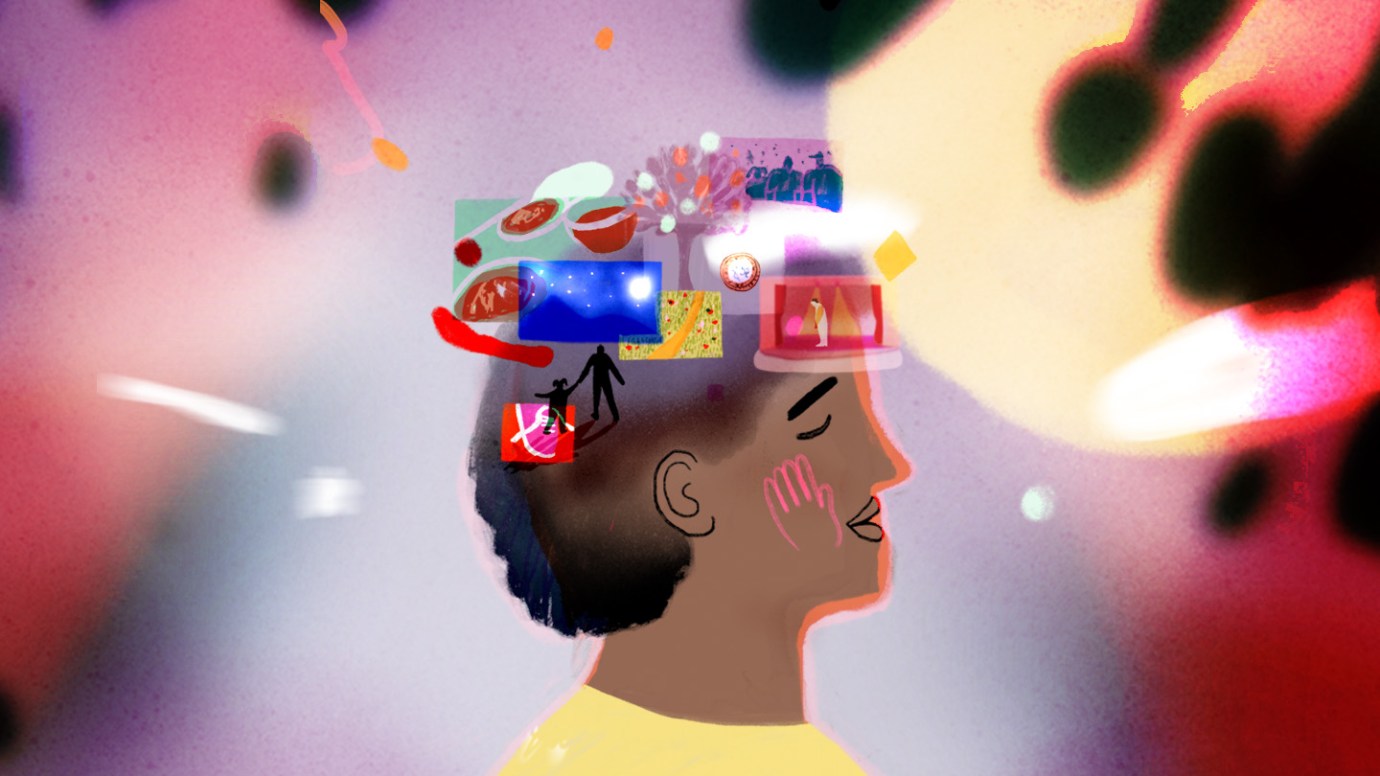
Memories fill our brains. But despite the popular fictional trope of a photographic memory, we can’t retain them all. Some slip away over time or blur at the edges, and that’s a good thing. Studio Desk
Is a Photographic Memory Real or Not?
Warm-up → Read & Listen → Check Understanding → Language → Use It
WARM UP
Think Ahead: Which detail do you think appears in this story?
a) A brain that works like a video camera
b) A test where students try to draw a coin
c) A robot that remembers everything
Ask:
(1) Can you remember what you ate for breakfast yesterday?
(2) Do you think human brains can take real photographs?
VOCABULARY
camera (/ˈkæm.ər.ə/, noun)
Meaning: A tool used to take photos or record videos.
Example: She pointed her camera at the sleeping cat.
brain (/breɪn/, noun)
Meaning: The part inside your head that thinks and feels.
Example: Your brain helps you solve tricky puzzles.
picture (/ˈpɪk.tʃər/, noun)
Meaning: An image or drawing of a person or thing.
Example: He drew a colourful picture of a sunny day.
draw (/drɔː/, verb)
Meaning: To make a picture using a pen or pencil.
Example: Can you draw a circle on the paper?
forget (/fəˈɡet/, verb)
Meaning: To not remember something.
Example: Do not forget your coat when you go outside.
secret (/ˈsiː.krət/, noun)
Meaning: Something special that is not known by everyone.
Example: They shared a fun secret in the playground.
Many popular stories show super smart people with special minds. These amazing people look at a page or picture once. They remember every single detail forever. People call this a photographic memory. They think the human brain works just like a video camera.
However, modern scientists study how our minds really work. They say this camera memory is not real at all. Our human brain does not take instant photographs. In one clever test, teachers ask students to draw a simple coin. Children see coins every day, but no student can draw the coin correctly from memory.
Our brain is doing something very different and clever. It stores main facts and ideas, not perfect pictures. It cleans away tiny useless details every single night. We forget small things to make fresh space for new learning. Forgetting is actually a wonderful secret of the human mind. It keeps our brains happy, healthy, and strong.

DISCUSSION QUESTIONS
(1) Do you think having a photographic memory would be fun?
(2) Why is it helpful to forget small details?
(3) What is something important that your brain remembers well?
(4) How do you feel when you forget your homework or lunchbox?
(5) What can you do to help your brain remember new words?
FILL IN THE GAPS
FILL THE GAPS
Section 1: Fill in the Gaps
Word Bank: camera, draw, pictures, secret
Many popular stories show super smart people with special minds. These amazing people look at a page or picture once. They remember every single detail forever. People call this a photographic memory. They think the human brain works just like a video _______(1).
However, modern scientists study how our minds really work. They say this camera memory is not real at all. Our human brain does not take instant photographs. In one clever test, teachers ask students to _______(2) a simple coin. Children see coins every day, but no student can draw the coin correctly from memory.
Our brain is doing something very different and clever. It stores main facts and ideas, not perfect _______(3). It cleans away tiny useless details every single night. We forget small things to make fresh space for new learning. Forgetting is actually a wonderful _______(4) of the human mind. It keeps our brains happy, healthy, and strong.
Section 2: Main Idea
What is the main idea of this story?
a) Human brains store every picture like a camera.
b) Photographic memory is not real, and forgetting helps our brains.
c) Students do not like using coins in school tests.
UNDERSTANDING
Section 3: True or False
(1) Photographic memory works just like a real camera in your head. T/F
(2) Students in the test could draw a coin perfectly from memory. T/F
(3) Forgetting small details helps make room for new learning. T/F
Section 4: Put Events in Order
Put these events in order (1, 2, 3):
( ) Teachers ask students to draw a simple coin from memory.
( ) People read stories about characters with special camera memories.
( ) Scientists explain that forgetting cleans away small details at night.
LANGUAGE
Section 5: Vocab Match
(1) camera
(2) brain
(3) draw
(4) forget
(5) secret
a) the part inside your head that thinks
b) to make a picture with a pencil
c) a tool that takes photos
d) something special that is not known by all
e) to not remember something
USE IT
Section 6: Discussion Builder
(1) The human _______ helps us think and learn new things every day.
a) camera
b) brain
(2) I try not to _______ my school bag when I leave home.
a) forget
b) draw
Section 7: Sentence Unscramble
(1) Unscramble the words:
A) brain
B) camera
C) like
D) works
E) Your
(2) Unscramble the words:
A) helps
B) us
C) learn
D) Forgetting
E) new facts
ANSWER KEY
Warm Up Answer:
b) A test where students try to draw a coin
Section 1 Answers:
(1) camera
(2) draw
(3) pictures
(4) secret
Section 2 Answer:
b) Photographic memory is not real, and forgetting helps our brains.
Section 3 Answers:
(1) False
(2) False
(3) True
Section 4 Answers:
( 2 ) Teachers ask students to draw a simple coin from memory.
( 1 ) People read stories about characters with special camera memories.
( 3 ) Scientists explain that forgetting cleans away small details at night.
Section 5 Answers:
(1) c
(2) a
(3) b
(4) e
(5) d
Section 6 Answers:
(1) b
(2) a
Section 7 Answers:
(1) Your brain works like camera. (E-A-D-C-B)
(2) Forgetting helps us learn new facts. (D-A-B-C-E)
Section 8 Answers:
Student individual answers will vary.

Thank you for your feedback!