

Science & Technology
Select a Level
NEW
9 Oct 2026
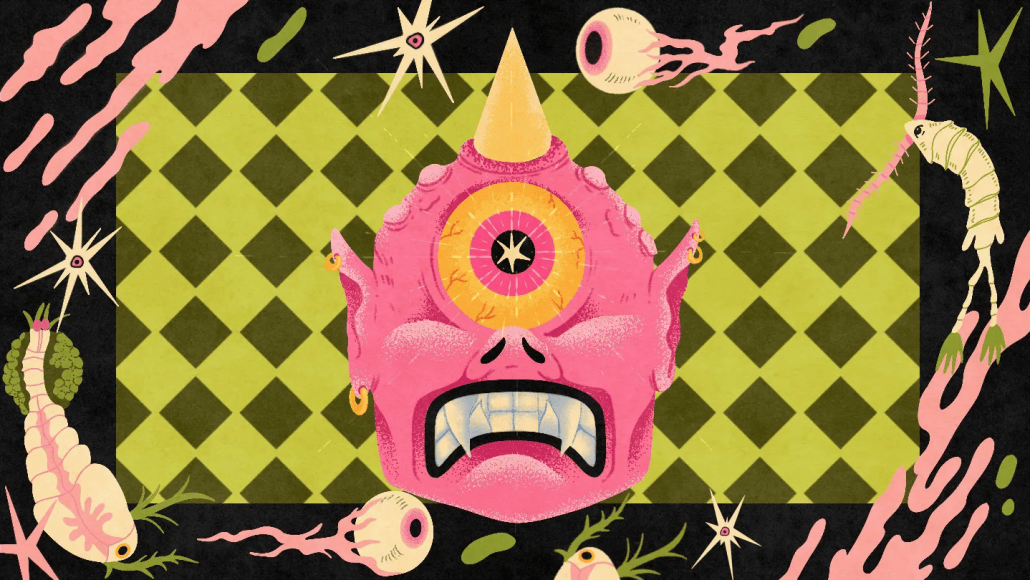
In the Greek epic poem The Odyssey, the Cyclops preys on the crew of Odysseus, the mythical king of Ithaca. These one-eyed giants don’t exist. But several animals evolved a single eye, including the ancestor of all vertebrates. Andreea Dumuta
The Cyclops May Be an Ancient Myth, But One-Eyed Creatures Are Real
Warm-up → Read & Listen → Check Understanding → Language → Use It
WARM UP
Section: Warm Up
Think Ahead: Which detail do you think appears in this story?
a) Giant monsters live in deep underground caves.
b) Tiny water animals have a single bright eye.
c) Scientists found a real giant on a secret island.
Ask:
(1) Have you ever heard stories about monsters with one eye?
(2) Where do you think tiny water creatures live?
VOCABULARY
eye (/aɪ/, noun)
Meaning: The body part that people and animals use to see things.
Example: The tiny animal has one bright eye on its head.
small (/smɔːl/, adjective)
Meaning: Little in size, not big.
Example: A copepod is a very small water creature.
water (/ˈwɔːtə/, noun)
Meaning: Clear liquid that fills rivers, lakes, and oceans.
Example: Fish and tiny swimmers live in cold water.
leg (/leɡ/, noun)
Meaning: A body part used for standing or moving around.
Example: The creature uses small legs to move fast.
swim (/swɪm/, verb)
Meaning: To move through water using arms, legs, or fins.
Example: Little swimmers like to swim in fresh lakes.
real (/riːəl/, adjective)
Meaning: Actually existing in life; not fake or made up.
Example: One-eyed creatures are real animals in nature.
Long ago, people talked about scary giants with one big eye. They were called cyclopes. These giant monsters are only in old story books. But one-eyed creatures are completely real today. They live in water all around us. They are very tiny animals. Their common name is copepods. A single copepod is smaller than a tiny pinhead. It has only one bright eye. The eye is right in the middle of its head. The tiny creature swims in cold ponds and fresh lakes. It uses small legs to move very fast. Hungry fish like to eat these little swimmers for lunch. Scientists look at them with a big magnifying glass. They see the single eye shining brightly in the light. It is amazing to see a real-life cyclops in nature. Nature has many fun surprises for young kids to discover every single day. Clear water holds many secret animals waiting to be found.

DISCUSSION QUESTIONS
1. Have you ever heard stories about a cyclops?
2. Where do copepods live?
3. Why do you think copepods are called real-life cyclopes?
4. How do copepods move in the water?
5. Would you like to look at tiny animals with a magnifying glass?
FILL IN THE GAPS
FILL THE GAPS
Section 1: Fill in the Gaps
Word Bank: eye, fish, legs, water
Long ago, people talked about scary giants with one big _______(1). They were called cyclopes. These giant monsters are only in old story books. But one-eyed creatures are completely real today. They live in _______(2) all around us. They are very tiny animals. Their common name is copepods. A single copepod is smaller than a tiny pinhead. It has only one bright eye. The eye is right in the middle of its head. The tiny creature swims in cold ponds and fresh lakes. It uses small _______(3) to move very fast. Hungry _______(4) like to eat these little swimmers for lunch. Scientists look at them with a big magnifying glass. They see the single eye shining brightly in the light. It is amazing to see a real-life cyclops in nature. Nature has many fun surprises for young kids to discover every single day. Clear water holds many secret animals waiting to be found.
Section 2: Main Idea
What is this story mostly about?
a) Giant monsters living in scary caves.
b) Tiny one-eyed water animals that are real.
c) How to catch fish in a deep lake.
UNDERSTANDING
Section 3: True or False
1. Cyclopes from old stories are real monsters. T/F
2. Copepods are tiny animals that live in water. T/F
3. A copepod has three bright eyes on its head. T/F
Section 4: Put Events in Order
[ ] A tiny copepod swims in a fresh lake.
[ ] People talked about giant cyclopes long ago.
[ ] Scientists look at small creatures with a glass.
LANGUAGE
Section 5: Vocab Match
1. Giant
2. Water
3. Tiny
4. Swim
5. Eye
a) Very, very small in size.
b) A very large and tall imaginary person.
c) The body part used for seeing things.
d) Clear liquid that fills rivers and lakes.
e) To move through water using arms or legs.
USE IT
Section 6: Discussion Builder
1. The tiny creature has one _______ eye. (a) green (b) bright (c) sad
2. Copepods live in _______ all around us. (a) water (b) trees (c) fire
Section 7: Sentence Unscramble
A. [ is / One-eyed / real / today / creatures / are ]
B. [ swims / in / lake / The / tiny / creature ]
ANSWER KEY
Answer Key - A1 Level
Warm Up: (b) Tiny water animals have a single bright eye. (Open answers for discussion questions)
Section 1: Fill in the Gaps
1. eye
2. water
3. legs
4. fish
Section 2: Main Idea
b) Tiny one-eyed water animals that are real.
Section 3: True or False
1. False (T/F)
2. True (T/F)
3. False (T/F)
Section 4: Put Events in Order
2, 1, 3
Section 5: Vocab Match
1 - b
2 - d
3 - a
4 - e
5 - c
Section 6: Discussion Builder
1. (b) bright
2. (a) water
Section 7: Sentence Unscramble
A. One-eyed creatures are real today.
B. The tiny creature swims in lake.
Section 8: Discussion Questions
(Teacher's discretion for student responses)

Thank you for your feedback!