Search this site
Results found for empty search
- The Great Pumpkin Escape - What a Funny Day! | Level Up English Club
Join our Kids small group Speaking Classes to bring these and other topics to life Book a Free Trial < KIDS NEWS Art & Culture Next Select a Level Level 1 Level 2 Level 3 Level 4 NEW 21 Oct 2026 The Great Pumpkin Escape - What a Funny Day! Warm-up → Read & Listen → Check Understanding → Language → Use It WARM UP Section: Warm Up Think Ahead: Which detail do you think appears in this story? a) A giant pumpkin rolls down a road. b) A cat finds the biggest pumpkin in a shop. c) A pumpkin flies to the moon. Ask: (1) Do you like pumpkins? What colour are they? (2) Is it windy today where you live? VOCABULARY giant (/ˈdʒaɪənt/ , adjective) Meaning: Very, very big. Example: The elephant has giant ears. wind (/wɪnd/ , noun) Meaning: Air that moves outside. You cannot see it, but you can feel it. Example: The wind is blowing my hat off my head! rope (/rəʊp/ , noun) Meaning: A long, strong, thick string. We use it to hold or pull things. Example: We are pulling the rope in our school game. roll (/rəʊl/ , verb) Meaning: To move by turning over and over, like a ball. Example: The ball is rolling down the hill. worried (/ˈwʌrid/ , adjective) Meaning: Feeling a little scared because something bad can happen. Example: I am worried because my dog is lost. catch (/kætʃ/ , verb) Meaning: To take and hold something that is moving. Example: I catch the ball with two hands. safe (/seɪf/ , adjective) Meaning: Not in danger. Nothing bad is happening to you. Example: My little brother is safe in his car seat. It is Sunday morning in October. Daniel is driving to Pumpkinfest with his wife and their baby girl. Pumpkinfest is a big autumn party at Phillips Farms in North Carolina, in the USA. At the farm, there is a giant orange pumpkin. It is not a real pumpkin. It is full of air, and it is as tall as a house! But today, the wind is very strong. It is pulling and pulling the ropes. Suddenly, the ropes break, and the big pumpkin is rolling down the road! Daniel sees the pumpkin. It is coming towards his car! At first, he is laughing. Then he sees a heavy pump. It is flying behind the pumpkin. Now Daniel is worried, so he drives his car backwards. Some kind people are running after the pumpkin. Daniel stops his car and helps them. They catch the ropes and take the air out. Now everyone is safe, and nobody is hurt. The farm is very happy. It says thank you to the helpers and gives them free tickets to Pumpkinfest. What a funny day! Share Lesson DISCUSSION QUESTIONS Section 8: Discussion Questions 1. What colour is the giant pumpkin? 2. Is the pumpkin real? What is inside it? 3. How does the dad feel? Why? 4. Do you like windy days? Why or why not? 5. What do you like at autumn parties? BACK TO TOP Unlock All Lessons ($3.99/mo) 🚀 Want more exercises and a worksheet pdf? This content is for premium subscribers and tuition parents only! Subscribe for $3.99/mo to unlock. FILL IN THE GAPS FILL THE GAPS Section 1: Fill in the Gaps Word Bank: safe | giant | worried | wind It is Sunday morning in October. Daniel is driving to Pumpkinfest with his wife and their baby girl. Pumpkinfest is a big autumn party at Phillips Farms in North Carolina, in the USA. At the farm, there is a _______(1) orange pumpkin. It is not a real pumpkin. It is full of air, and it is as tall as a house! But today, the _______(2) is very strong. It is pulling and pulling the ropes. Suddenly, the ropes break, and the big pumpkin is rolling down the road! Daniel sees the pumpkin. It is coming towards his car! At first, he is laughing. Then he sees a heavy pump. It is flying behind the pumpkin. Now Daniel is _______(3), so he drives his car backwards. Some kind people are running after the pumpkin. Daniel stops his car and helps them. They catch the ropes and take the air out. Now everyone is _______(4), and nobody is hurt. The farm is very happy. It says thank you to the helpers and gives them free tickets to Pumpkinfest. What a funny day! Section 2: Main Idea What is the main idea of the story? a) The wind takes a giant air pumpkin down a road, and kind people catch it. b) A family grows a giant pumpkin for a party. c) A dad buys a pumpkin at the farm. UNDERSTANDING Section 3: True or False 1. The giant pumpkin is full of air. T/F 2. The wind is very weak. T/F 3. The helpers get free tickets to Pumpkinfest. T/F Section 4: Put Events in Order Put the events in order. Write 1, 2 or 3. a) ___ Kind people catch the ropes. b) ___ The ropes break in the wind. c) ___ The pumpkin rolls down the road. LANGUAGE Section 5: Vocab Match 1. giant 2. wind 3. rope 4. worried 5. safe a) not in danger b) air that moves outside c) very, very big d) a little scared e) a long, strong, thick string USE IT Section 6: Discussion Builder Choose the best word to complete each sentence. 1. The pumpkin is rolling because the wind is ______. a) strong b) sleepy c) small 2. I think the helpers are very ______. a) kind b) angry c) sad Section 7: Sentence Unscramble Put the words in the correct order to make a sentence. 1. A) down | B) The pumpkin | C) the road. | D) is | E) rolling 2. A) the | B) catch | C) Kind | D) ropes. | E) people SHOW ANSWERS BACK TO TOP ANSWER KEY Answer Key Warm Up: a) A giant pumpkin rolls down a road. Section 1: Fill in the Gaps (1) giant, (2) wind, (3) worried, (4) safe Section 2: Main Idea a) The wind takes a giant air pumpkin down a road, and kind people catch it. Section 3: True or False 1. True 2. False (The wind is very strong.) 3. True Section 4: Put Events in Order a) 3 – Kind people catch the ropes. b) 1 – The ropes break in the wind. c) 2 – The pumpkin rolls down the road. Section 5: Vocab Match 1 – c, 2 – b, 3 – e, 4 – d, 5 – a Section 6: Discussion Builder 1. a) strong 2. a) kind Section 7: Sentence Unscramble 1. B – D – E – A – C: The pumpkin is rolling down the road. 2. C – E – B – A – D: Kind people catch the ropes. Section 8: Discussion Questions (model answers) 1. It is orange. 2. No, it is not real. It is full of air. 3. He is laughing, but he is also worried because a heavy pump is flying behind the pumpkin. 4. Open answer, e.g. Yes, I like windy days because I fly my kite. 5. Open answer, e.g. I like the games, the pumpkins and the food. BACK TO TOP Suggest Feature Report an Error Close Thank you for your feedback! SUBMIT Report an error
- Snakes in a Suitcase! More Than 90 Reptiles Found at a German Airport | Level Up English Club
Join our Kids small group Speaking Classes to bring these and other topics to life Book a Free Trial < KIDS NEWS Animals & Environment Next Select a Level Level 1 Level 2 Level 3 Level 4 NEW 18 Oct 2026 Not all the the snakes and lizards were alive, officials said. German Customs Snakes in a Suitcase! More Than 90 Reptiles Found at a German Airport Warm-up → Read & Listen → Check Understanding → Language → Use It WARM UP Section: Warm Up Think Ahead: Which detail do you think appears in this story? a) Snakes hidden in socks b) A cat sleeping on a train c) A lion driving a car Ask: (1) Do you like snakes and lizards? Why or why not? (2) What do you put in your suitcase when you travel? VOCABULARY airport (/ˈeə.pɔːt/ , noun) Meaning: A place where planes go up into the sky and come down. Example: We go to the airport to fly to Spain. suitcase (/ˈsuːt.keɪs/ , noun) Meaning: A big bag with a handle for your clothes when you travel. Example: My suitcase is red and blue. snake (/sneɪk/ , noun) Meaning: A long animal with no legs. Example: The green snake is sleeping in the sun. lizard (/ˈlɪz.əd/ , noun) Meaning: A small animal with four legs, a long tail and dry skin. Example: The lizard is sitting on a hot rock. bottle (/ˈbɒt.əl/ , noun) Meaning: A tall container for drinks or shampoo. Example: I have a bottle of water in my bag. nervous (/ˈnɜː.vəs/ , adjective) Meaning: A little bit scared or worried. Example: I am nervous before my swimming test. sock (/sɒk/ , noun) Meaning: Soft clothing you wear on your foot. Example: My socks are yellow today. safe (/seɪf/ , adjective) Meaning: Not in danger. Example: The kitten is safe in its basket. A man is at Cologne Bonn Airport in Germany. He has a big suitcase. He is very nervous. Customs officers stop him. Customs officers check bags at the airport. They open his suitcase. What is inside? Clothes? No! Snakes and lizards! There are 37 snakes and 55 lizards. Some snakes are dangerous. They can bite. The animals are in small bottles. Some are in plastic boxes. Some are inside socks! The animals are hot, hungry and scared. Some animals are not alive. The man is from Mexico. He says the animals are for a friend. The officers say no. The man cannot stay in Germany. He is flying back to Istanbul in Turkey. Now the animals are safe. They are living at a snake farm in Germany. People there are giving them food and water. The officers are happy. They are saving many animals. Snakes and lizards are not toys. Wild animals belong in nature, not in suitcases! Share Lesson DISCUSSION QUESTIONS Section 8: Discussion Questions 1. Why is the man nervous? 2. Where are the animals in the suitcase? 3. Is it OK to put animals in a suitcase? Why? 4. What is your favourite animal? Where does it live? 5. How can we help wild animals? BACK TO TOP Unlock All Lessons ($3.99/mo) 🚀 Want more exercises and a worksheet pdf? This content is for premium subscribers and tuition parents only! Subscribe for $3.99/mo to unlock. FILL IN THE GAPS FILL THE GAPS Section 1: Fill in the Gaps Word Bank: bottles, nervous, safe, suitcase Read the article and complete the gaps with words from the Word Bank. A man is at Cologne Bonn Airport in Germany. He has a big _______(1). He is very _______(2). Customs officers stop him. Customs officers check bags at the airport. They open his suitcase. What is inside? Clothes? No! Snakes and lizards! There are 37 snakes and 55 lizards. Some snakes are dangerous. They can bite. The animals are in small _______(3). Some are in plastic boxes. Some are inside socks! The animals are hot, hungry and scared. Some animals are not alive. The man is from Mexico. He says the animals are for a friend. The officers say no. The man cannot stay in Germany. He is flying back to Istanbul in Turkey. Now the animals are _______(4). They are living at a snake farm in Germany. People there are giving them food and water. The officers are happy. They are saving many animals. Snakes and lizards are not toys. Wild animals belong in nature, not in suitcases! Section 2: Main Idea What is the main idea of the story? Circle a, b or c. a) A man has a pet snake at home. b) Officers find many snakes and lizards in a man's suitcase at an airport. c) A snake farm in Germany is looking for new animals. UNDERSTANDING Section 3: True or False Read the statements. Circle T (True) or F (False). 1. The man is very happy. T/F 2. Some animals are inside socks. T/F 3. The animals are living at a zoo now. T/F Section 4: Put Events in Order Write 1, 2 or 3 next to each event. a) The officers open the suitcase. ____ b) The animals go to a snake farm. ____ c) A nervous man is at the airport. ____ LANGUAGE Section 5: Vocab Match 1. airport 2. suitcase 3. lizard 4. nervous 5. safe a) not in danger b) a big bag for your clothes when you travel c) a little bit scared or worried d) a place where planes go up and come down e) a small animal with four legs and a long tail USE IT Section 6: Discussion Builder Choose the best word or phrase to complete each sentence. 1. The animals are sad because they are inside _______ bottles. a) big b) small c) blue 2. Wild animals belong in _______, not in suitcases. a) nature b) shops c) cars Section 7: Sentence Unscramble Put the parts in the correct order to make a sentence from the story. 1. A) nervous B) The man C) at the airport. D) is E) very ______________________________________________ 2. A) a snake farm. B) safe C) The snakes D) at E) are ______________________________________________ SHOW ANSWERS BACK TO TOP ANSWER KEY Warm Up a) Snakes hidden in socks Section 1: Fill in the Gaps (1) suitcase (2) nervous (3) bottles (4) safe Section 2: Main Idea b) Officers find many snakes and lizards in a man's suitcase at an airport. Section 3: True or False 1. False – he is very nervous. 2. True 3. False – they are living at a snake farm. Section 4: Put Events in Order c = 1, a = 2, b = 3 (A nervous man is at the airport. → The officers open the suitcase. → The animals go to a snake farm.) Section 5: Vocab Match 1. airport – d) a place where planes go up and come down 2. suitcase – b) a big bag for your clothes when you travel 3. lizard – e) a small animal with four legs and a long tail 4. nervous – c) a little bit scared or worried 5. safe – a) not in danger Section 6: Discussion Builder 1. b) small 2. a) nature Section 7: Sentence Unscramble 1. B – D – E – A – C: The man is very nervous at the airport. 2. C – E – B – D – A: The snakes are safe at a snake farm. Section 8: Discussion Questions (model answers) 1. He is nervous because he has snakes and lizards in his suitcase. 2. They are in bottles, plastic boxes and socks. 3. No, it is not OK because the animals are scared and hungry. 4. My favourite animal is a tiger. It lives in the forest. 5. We can leave them in nature and keep their homes clean. BACK TO TOP Suggest Feature Report an Error Close Thank you for your feedback! SUBMIT Report an error
- Master Your To-Do List and Stay Focused | Level Up English Club
Join our Kids small group Speaking Classes to bring these and other topics to life Book a Free Trial < KIDS NEWS Science & Technology Next Select a Level Level 1 Level 2 Level 3 Level 4 NEW 17 Jul 2026 Master Your To-Do List and Stay Focused Warm-up → Read & Listen → Check Understanding → Language → Use It WARM UP Think Ahead: Which detail do you think appears in this story? a) Writing a giant list helps you complete tasks instantly b) Making smaller lists and taking short breaks helps your focus c) Sitting down for ten hours without moving is best for school Ask: (1) Do you use a to-do list for your chores or schoolwork? (2) How do you feel when you have too many things to do? VOCABULARY list noun focus verb break noun task noun brain noun simple adjective A series of written names or items. Example: I write a shopping list. To give all your attention to something. Example: I need to focus on my homework. A short time to rest from work. Example: Let us take a five-minute break. A piece of work that you must do. Example: Cleaning my bedroom is a big task. The organ inside your head that thinks. Example: Your brain needs sleep to work well. Easy to do or understand. Example: This maths game is very simple. Do you have many things to do? You can make a helpful list. A to-do list is great for your schoolwork. Sometimes it is hard to focus on your work. Science says you should make small lists. Do not put too many things on one page. You can choose one important task to do first. When you finish it, your brain feels happy. This gives you more energy. It is also good to take a short break. You can walk or drink some water. This helps you think better. Another tip is to make your goals simple. Do not try to do everything at once. You can do less things but do them really well. This is a brilliant way to organise your day and feel proud of your hard work. Photo by Eden Constantino on Unsplash Share Lesson DISCUSSION QUESTIONS 1) Do you prefer writing lists on paper or on a tablet? 2) What is your favourite thing to do when you take a short break? 3) Why do you think a very big list can make us feel tired? 4) How do you feel when you tick a finished task off your list? 5) What is an important task you must do every single day? 6) Do you think listening to music helps you focus on schoolwork BACK TO TOP Unlock All Lessons ($3.99/mo) 🚀 Want more exercises and a worksheet pdf? This content is for premium subscribers and tuition parents only! Subscribe for $3.99/mo to unlock. FILL IN THE GAPS FILL THE GAPS Section 1: Fill in the Gaps Word Bank: list, focus, task, brain Do you have many things to do? You can make a helpful _______(1). A to-do list is great for your schoolwork. Sometimes it is hard to _______(2) on your work. Science says you should make small lists. Do not put too many things on one page. You can choose one important _______(3) to do first. When you finish it, your _______(4) feels happy. This gives you more energy. It is also good to take a short break. You can walk or drink some water. This helps you think better. Another tip is to make your goals simple. Do not try to do everything at once. You can do less things but do them really well. This is a brilliant way to organise your day and feel proud of your hard work. Section 2: Main Idea What is the main idea of this text? a) Why taking a long sleep is better than going to school b) How making small lists and short breaks helps you do tasks well c) How to draw a picture of a human brain with a pen UNDERSTANDING Section 3: True or False 1. Science says you should make giant lists with fifty items. T/F 2. Finishing an important task makes your brain feel happy. T/F 3. Taking a short break can help you think better. T/F Section 4: Put Events in Order Put these steps in the correct order from 1 to 3: A) Take a short break to walk or drink some water B) Choose one important task to do first C) Write down a helpful small to-do list LANGUAGE Section 5: Vocab Match 1) focus 2) list 3) break 4) task a) A short time to rest b) A piece of work to do c) To give your attention to something d) A series of written items USE IT Section 6: Discussion Builder 1. When I have a big exam, I choose to _______(1) on one topic first.a) focusb) dance 2. Taking a short _______(2) helps me feel fresh and ready to learn.a) breakb) song Section 7: Sentence Unscramble 1. A) list B) helpful C) write D) down E) a 2. A) your B) helps C) break D) a E) brain SHOW ANSWERS BACK TO TOP ANSWER KEY Section: Warm Up - Think Ahead: b Section 1 - (1) list (2) focus (3) task (4) brain Section 2 - b Section 3 - 1. False, 2. True, 3. True Section 4 - 1-C, 2-B, 3-A Section 5 - 1-c, 2-d, 3-a, 4-b Section 6 - (1) a, (2) a Section 7 - 1) Write down a helpful list. 2) A break helps your brain. Section 8 - Student answers will vary. BACK TO TOP Suggest Feature Report an Error Close Thank you for your feedback! SUBMIT Report an error
- Ancient Tombs are Found by Scientist in Egypt | Level Up English Club
Join our Kids small group Speaking Classes to bring these and other topics to life Book a Free Trial < KIDS NEWS History Next Select a Level Level 1 Level 2 Level 3 Level 4 NEW 2 Oct 2026 Ancient Tombs are Found by Scientist in Egypt Warm-up → Read & Listen → Check Understanding → Language → Use It WARM UP Section: Warm Up Think Ahead: Which detail do you think appears in this story? a) Old tombs in Egypt b) A new space rocket c) A fast sports car Ask: (1) Do you know about ancient Egypt? (2) Would you like to find old treasure? VOCABULARY tomb (/tuːm/ , noun) Meaning: A special place under the ground for dead people. Example: The king was buried in a stone tomb. ancient (/ˈeɪn.ʃənt/ , adjective) Meaning: Very, very old from a long time ago. Example: We saw ancient items in the museum. dig (/dɪɡ/ , verb) Meaning: To move earth or sand to make a hole. Example: Dogs like to dig holes in the garden. statue (/ˈstætʃ.uː/ , noun) Meaning: A model of a person or animal made of stone or metal. Example: There is a big statue in the park. find (/faɪnd/ , verb) Meaning: To see something for the first time. Example: I find my lost shoes under the bed. gold (/ɡəʊld/ , noun) Meaning: A yellow valuable metal. Example: She wears a shiny gold ring. Egypt is a hot country with lots of sand. Experts dig in the ground today. They find very old items under the dirt. They find an ancient tomb in Luxor. The tomb is thousands of years old. Inside, experts see a stone statue. They also see shiny gold objects. Everything is quiet and dark inside the tomb. Many people want to see the old site. The workers carry the objects carefully. They clean the dust from the old stone statues. They work under the bright sun. This new find is exciting for Egypt. Children can learn about history now. Visitors travel to the city to see it. Egypt is full of happy secrets. In this undated photo, artifacts are displayed that were found in the three new graves of senior statesmen found in the Dra' Abu al-Naga necropolis area in Luxor, Egypt. (Egypt Ministry of Tourism and Antiquities via AP) In this undated photo, artifacts are displayed that were found in the three new graves of senior statesmen found in the Dra' Abu al-Naga necropolis area in Luxor, Egypt. (Egypt Ministry of Tourism and Antiquities via AP) Share Lesson DISCUSSION QUESTIONS (1) Do you like learning about old places? (2) What color is gold? (3) Would you like to dig for old items? (4) Do you prefer museums or parks? (5) What is your favorite ancient story? BACK TO TOP Unlock All Lessons ($3.99/mo) 🚀 Want more exercises and a worksheet pdf? This content is for premium subscribers and tuition parents only! Subscribe for $3.99/mo to unlock. FILL IN THE GAPS FILL THE GAPS Section 1: Fill in the Gaps Word Bank: ancient, dig, find, statue Egypt is a hot country with lots of sand. Experts _______(1) in the ground today. They find very old items under the dirt. They find an _______(2) tomb in Luxor. The tomb is thousands of years old. Inside, experts see a stone _______(3). They also see shiny gold objects. Everything is quiet and dark inside the tomb. Many people want to see the old site. The workers carry the objects carefully. They clean the dust from the old stone statues. They work under the bright sun. This new _______(4) is exciting for Egypt. Children can learn about history now. Visitors travel to the city to see it. Egypt is full of happy secrets. Section 2: Main Idea What is the main idea of the story? a) Experts found old tombs and statues in Egypt. b) People are building a new city in the sand. c) Gold is very expensive to buy today. UNDERSTANDING Section 3: True or False (1) Experts dig in the ground in Egypt. T/F (2) The tomb is full of new plastic toys. T/F (3) Visitors travel to Luxor to see the site. T/F Section 4: Put Events in Order Put these events in order from 1 to 3: ( ) Workers carefully clean the old items. ( ) Experts dig in the sand in Luxor. ( ) They find an old stone statue and gold. LANGUAGE Section 5: Vocab Match (1) ancient (2) tomb (3) dig (4) statue (5) gold a) A yellow shiny metal b) A figure made of stone or metal c) A place for dead people under the ground d) Very, very old e) To make a hole in the earth USE IT Section 6: Discussion Builder (1) The experts _______ old objects in the dirt. a) find b) fly (2) They look at a stone _______ in the dark room. a) statue b) banana Section 7: Sentence Unscramble (1) Unscramble the words: A / tomb / is / ancient / this A: this / B: tomb / C: is / D: ancient / E: A (2) Unscramble the words: dig / in / sand / Workers / the A: Workers / B: the / C: in / D: dig / E: sand SHOW ANSWERS BACK TO TOP ANSWER KEY Warm Up Answer: a Section 1: (1) dig, (2) ancient, (3) statue, (4) find Section 2: a Section 3: (1) True, (2) False, (3) True Section 4: 3, 1, 2 Section 5: (1) d, (2) c, (3) e, (4) b, (5) a Section 6: (1) a, (2) a Section 7: (1) This is an ancient tomb. (C-A-E-D-B), (2) Workers dig in the sand. (A-D-C-B-E) Section 8: Open student responses. BACK TO TOP Suggest Feature Report an Error Close Thank you for your feedback! SUBMIT Report an error
- Scientists Discover Glowing Purple Creature | Level Up English Club
Join our Kids small group Speaking Classes to bring these and other topics to life Book a Free Trial < KIDS NEWS Animals & Environment Next Select a Level Level 1 Level 2 Level 3 Level 4 NEW 12 Jun 2026 Scientists Discover Glowing Purple Creature Warm-up → Read & Listen → Check Understanding → Language → Use It WARM UP Think Ahead: Which detail do you think appears in this story? a) A bird that flies high b) A slug that glows in the deep sea c) A fish that can walk on land Ask: (1) Have you ever seen a creature that glows in the dark? (2) What do you think lives at the very bottom of the ocean? VOCABULARY Ocean (n) Deep (adj) Glow (v) Scientist (n) Discover (v) Rare (adj) The large body of salt water that covers most of the Earth. Going a long way down from the surface. To produce a steady, soft light. A person who studies science to learn about the world. To find something for the first time. Not found or seen very often. Scientists found a new creature in the deep ocean. The ocean is very dark and cold. This creature is a rare sea animal. It looks like a soft, purple slug. It can glow in the dark. This means it makes its own bright light. A scientist used a special robot with a camera to see it. The robot travelled deep down into the water. The scientists watched the animal swim. They say the light helps the animal find food. It also helps the animal hide from big fish. This discovery is very exciting. It shows us that many secrets are still hidden in the deep sea. We can learn a lot from this small, colourful animal. Share Lesson DISCUSSION QUESTIONS 1. Would you like to travel in an underwater robot? 2. Why do you think the ocean is so dark at the bottom? 3. What other animals can make their own light? 4. What colour would you like a new sea creature to be? 5. Why do scientists use cameras to study animals? 6. Is it important to learn about the deep sea? BACK TO TOP Unlock All Lessons ($3.99/mo) 🚀 Want more exercises and a worksheet pdf? This content is for premium subscribers and tuition parents only! Subscribe for $3.99/mo to unlock. FILL IN THE GAPS FILL THE GAPS Section 1 Fill in the Gap Word Bank: ocean, rare, glow, scientist Scientists found a new creature in the deep _______(1). The ocean is very dark and cold. This creature is a _______(2) sea animal. It looks like a soft, purple slug. It can _______(3) in the dark. This means it makes its own bright light. A _______(4) used a special robot with a camera to see it. The robot travelled deep down into the water. The scientists watched the animal swim. They say the light helps the animal find food. It also helps the animal hide from big fish. This discovery is very exciting. It shows us that many secrets are still hidden in the deep sea. We can learn a lot from this small, colourful animal. Section 2 Main Idea What is the main idea of this article? a) Scientists like to build robots for fun. b) A new glowing purple creature was discovered in the deep ocean. c) Big fish love to eat purple slugs in the dark. UNDERSTANDING Section 3: True or False 1. The deep ocean is warm and bright. T/F 2. The new sea creature can make its own light. T/F 3. Scientists used a robot with a camera to see the animal. T/F Section 4: Put the events in order from 1 to 3 a) The robot travelled deep down into the dark water. b) Scientists watched the purple creature swim and glow. c) Researchers built a special robot with a camera. LANGUAGE Section 5: Vocab Match 1. Ocean 2. Glow 3. Scientist 4. Rare a) Not seen very often b) A person who studies the world c) To make a soft light d) The large salt water on Earth USE IT Section 6: Discussion Builder 1. I think the deep ocean is very _______ because it has glowing animals. a) boring b) exciting 2. If I were a scientist, I would want to _______ new things in the sea. a) discover b) forget Section Section 7: Sentence Unscramble 1. A) found B) a C) new D) creature E) scientists 2. A) can B) glow C) it D) dark E) in the SHOW ANSWERS BACK TO TOP ANSWER KEY Warm Up: b Section 1: (1) ocean, (2) rare, (3) glow, (4) scientist Section 2: b Section 3: 1. F, 2. T, 3. T Section 4: 1. c 2. a 3. b Section 5: 1-d 2-c 3-b 4-a Section 6: 1-b, 2-a Section 7: 1. E-A-B-C-D (Scientists found a new creature), 2. C-A-B-E-D (It can glow in the dark) Section BACK TO TOP Suggest Feature Report an Error Close Thank you for your feedback! SUBMIT Report an error
- Lost Turtle Rhossi Returns Home From 5000 Miles Away | Level Up English Club
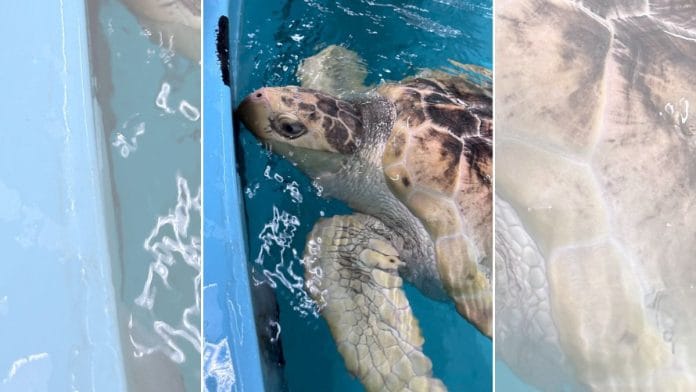
Join our Kids small group Speaking Classes to bring these and other topics to life Book a Free Trial < KIDS NEWS Animals & Environment Next Select a Level Level 1 Level 2 Level 3 Level 4 NEW 1 Sept 2026 Rhossi’s journey is an extreme example of how far a young Kemp's ridley turtle can travel from its natural habitat in the Gulf of Mexico | X/@angleseyseazoo Lost Turtle Rhossi Returns Home From 5000 Miles Away Warm-up → Read & Listen → Check Understanding → Language → Use It WARM UP Think Ahead: Which detail do you think appears in this story? a) A small turtle travels on a big airplane across the ocean. b) A sea turtle returns to the ocean after two years of help. c) A turtle lives in a zoo with pandas and monkeys. Ask: (1) Do you like sea animals? (2) How can people help hurt animals? VOCABULARY turtle (/ˈtɜː.təl/ , noun) Meaning: A reptile with a hard shell that lives in water or on land. Example: The tiny turtle swims in the blue water. rescue (/ˈres.kjuː/ , verb) Meaning: To save someone or something from danger. Example: Kind people rescue the lost dog in the rain. ocean (/ˈəʊ.ʃən/ , noun) Meaning: A very large area of salty sea water. Example: Whales and fish live in the big ocean. travel (/ˈtræv.əl/ , verb) Meaning: To go from one place to another place. Example: We travel to the beach every summer. healthy (/ˈhel.θi/ , adjective) Meaning: Strong and not sick. Example: Eating fresh fruit keeps your body healthy. home (/həʊm/ , noun) Meaning: The place where an animal or person lives. Example: The forest is a peaceful home for birds. Rhossi is a Kemp's ridley sea turtle. This special sea turtle is very rare. Two years ago, Rhossi is cold and sick. People find her far from her warm ocean home. Kind helpers rescue her quickly. They take her to a big animal hospital. Doctors look after Rhossi every day. She gets good food and medicine. Slowly, Rhossi becomes strong and happy. Her shell is hard again. Now, she is very healthy and ready for a big adventure. Rhossi needs to travel 8,000 kilometres back home. She travels to the warm Gulf of Mexico. Helpers put her into the blue ocean water. Rhossi swims away fast. She is back in her real ocean home at last! Share Lesson DISCUSSION QUESTIONS (1) Why is Rhossi a special sea turtle? (2) How do helpers help Rhossi when she is sick? (3) Where is Rhossi's warm ocean home? (4) Would you like to help sick animals at a hospital? (5) Why is it important to protect sea turtles? BACK TO TOP Unlock All Lessons ($3.99/mo) 🚀 Want more exercises and a worksheet pdf? This content is for premium subscribers and tuition parents only! Subscribe for $3.99/mo to unlock. FILL IN THE GAPS FILL THE GAPS Section 1: Fill in the Gaps Word Bank: healthy, ocean, rescue, travel Rhossi is a Kemp's ridley sea turtle. This special sea turtle is very rare. Two years ago, Rhossi is cold and sick. People find her far from her warm ocean home. Kind helpers _______(1) her quickly. They take her to a big animal hospital. Doctors look after Rhossi every day. She gets good food and medicine. Slowly, Rhossi becomes strong and happy. Her shell is hard again. Now, she is very _______(2) and ready for a big adventure. Rhossi needs to _______(3) 8,000 kilometres back home. She travels to the warm Gulf of Mexico. Helpers put her into the blue _______(4) water. Rhossi swims away fast. She is back in her real ocean home at last! Section 2: Main Idea What is the main idea of this story? a) A turtle learns how to fly in an airplane. b) A rescued sea turtle gets healthy and returns to the ocean. c) Doctors build a new hospital for sea turtles. UNDERSTANDING Section 3: True or False 1. Rhossi was cold and sick two years ago. T/F 2. Rhossi stayed at the hospital for ten years. T/F 3. Rhossi swims back into the Gulf of Mexico. T/F Section 4: Put Events in Order Put these events in order from 1 to 3: ( ) Helpers release Rhossi into the blue ocean. ( ) Rhossi gets cold and sick far from home. ( ) Doctors give Rhossi food and medicine to make her strong. LANGUAGE Section 5: Vocab Match 1. turtle 2. rescue 3. ocean 4. healthy 5. travel a) to save someone from danger b) strong and not sick c) a reptile with a hard shell d) to go from one place to another e) a very large area of salty sea water USE IT Section 6: Discussion Builder Choose the correct word to complete the sentence: 1. Kind people _______ the sick sea animal from danger. a) rescue b) fly c) sleep 2. Fish swim freely in the big blue ______. a) box b) ocean c) house Section 7: Sentence Unscramble Unscramble the words to make correct sentences: 1. [is] [A] [the ocean] [in] [turtle] [swimming] 2. [healthy] [The] [turtle] [is] [now] SHOW ANSWERS BACK TO TOP ANSWER KEY Warm Up Answer: b Section 1: (1) rescue, (2) healthy, (3) travel, (4) ocean Section 2: b Section 3: 1. T, 2. F, 3. T Section 4: 3, 1, 2 Section 5: 1-c, 2-a, 3-e, 4-b, 5-d Section 6: 1-a, 2-b Section 7: 1. A turtle is swimming in the ocean. 2. The turtle is now healthy. Section 8: Open discussion based on student opinions. BACK TO TOP Suggest Feature Report an Error Close Thank you for your feedback! SUBMIT Report an error
- Turtle Champion | Level Up English Club
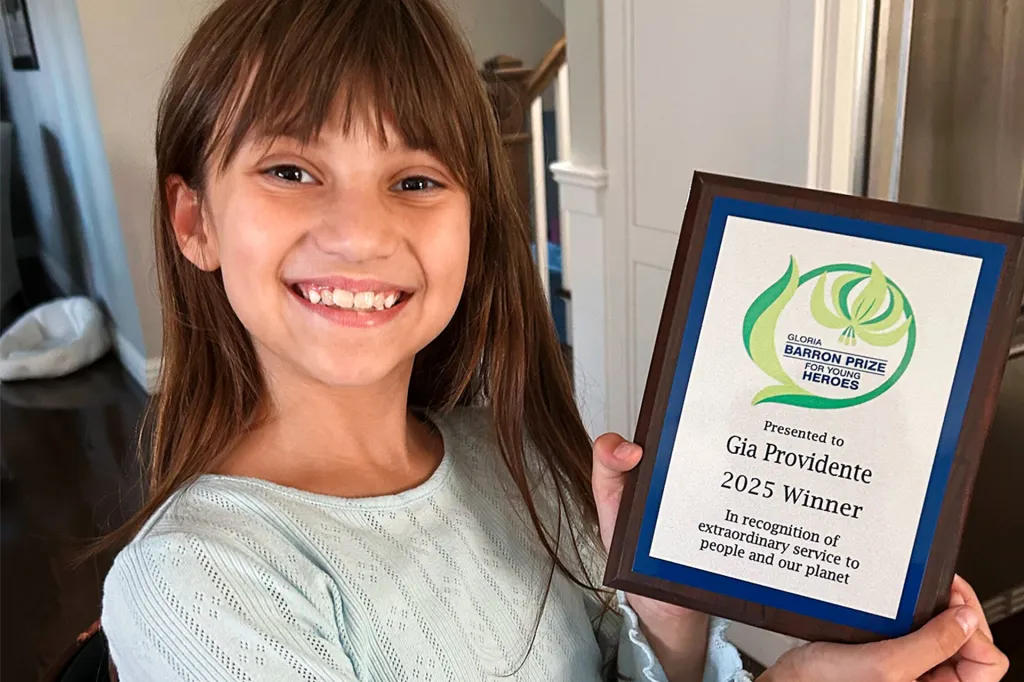
Join our Kids small group Speaking Classes to bring these and other topics to life Book a Free Trial < KIDS NEWS Animals & Environment Next Select a Level Level 1 Level 2 Level 3 Level 4 NEW 25 May 2026 Turtle Champion Warm-up → Read & Listen → Check Understanding → Language → Use It WARM UP Think Ahead: Which extra detail do you think is in the story? a) Gia sees a large shark near the beach. b) Gia designs special signs to protect turtles. c) Gia stops cars from driving on the road. Ask: (1) Do you like turtles? Why or why not? (2) Have you ever seen an animal sign near a road? VOCABULARY shell (noun) mix (verb) danger (noun) slogan (noun) brave (adjective) ʃɛl The hard outer cover of an animal like a turtle Example: The turtle pulled its head inside its hard shell. mɪks To combine different things together Example: You can mix yellow and blue paint to make green. ˈdeɪndʒər The possibility of harm or something bad happening Example: The small animals ran away when they sensed danger. ˈsloʊɡən A short and clever phrase that is easy to remember Example: The school uses a popular slogan for its recycling program. breɪv Ready to face difficult or scary situations Example: The brave firefighter saved the cat from the tree. Gia Providente is a nine-year-old girl. She lives in Long Island, New York. She loves turtles. Gia wanted to help diamondback terrapin turtles. These turtles have a beautiful diamond pattern on their shell. They live in water where saltwater and freshwater mix. Female turtles come to the land from May to July to lay eggs. But these turtles are in danger. Cars and boats can hit them. Gia wanted to protect them. She had a great idea. She designed special signs for parks near the water. The signs say, “Go slow, terrapins below.” This slogan is short and easy to see. Town workers put her signs in two local parks. Gia won a prize for helping her community. She tells other children to be brave and never give up. Share Lesson DISCUSSION QUESTIONS 1. Why are cars and boats dangerous for turtles? 2. Was Gia's slogan "Go slow, terrapins below" a good idea? Why? 3. Have you ever seen a wild animal in your neighborhood? 4. Do you want to win a prize for helping animals? Why or why not? 5. Would you like to design a sign for your town? What would it say? 6. Why is it important to protect wild turtles? BACK TO TOP Unlock All Lessons ($3.99/mo) 🚀 Want more exercises and a worksheet pdf? This content is for premium subscribers and tuition parents only! Subscribe for $3.99/mo to unlock. FILL IN THE GAPS FILL THE GAPS 1. Listen to the audio and complete the gaps below: Gia Providente is a nine-year-old girl. She lives in Long Island, New York. She loves turtles. Gia wanted to help diamondback terrapin turtles. These turtles have a beautiful diamond pattern on their (1) _______. They live in water where saltwater and freshwater (2) _______. Female turtles come to the land from May to July to lay eggs. But these turtles are in (3) _______. Cars and boats can hit them. Gia wanted to protect them. She had a great idea. She designed special signs for parks near the water. The signs say, “Go slow, terrapins below.” This slogan is short and easy to see. Town workers put her signs in two local parks. Gia won a prize for helping her community. She tells other children to be (4) _______ and never give up. 2. MAIN IDEA Choose one: Gia designed signs to protect turtles from cars and boats in her community. A turtle swam away from New York to live in a bigger ocean. Gia and her friend Vincent found a diamond on a beach. UNDERSTANDING 3. TRUE OR FALSE Gia Providente is nine years old. T / F Terrapin turtles only live in saltwater. T / F Gia won a prize for her community work. T / F 4. PUT EVENTS IN ORDER Put the events from the story in the correct order from first (1) to last (3): [ ] Town workers installed the signs in two local parks. [ ] Gia saw turtle signs at another beach and wanted them at home. [ ] Gia designed special turtle awareness signs for her area. LANGUAGE 5. Match each vocabulary word with a definition: 1. Shell (n) 2. Mix (v) 3. Danger (n) 4. Brave (adj) a) The possibility of harm or something bad happening. b) Ready to face difficult or scary situations. c) The hard outer cover of an animal like a turtle. d) To combine different things together. USE IT 6. DISCUSSION BUILDER Choose the best phrase for each gap: 1. Gia wanted to protect the turtles ________ it would help drivers see them. because / so / but 2. The turtles face dangers from cars, ________ the new signs help them stay safe. because / but / so 7. SENTENCE UNSCRAMBLE 1. A. I think B. turtles are C. because D. wonderful animals E. they are quiet. 2. A. We should B. help animals C. keep them safe. D. to E. in our town SHOW ANSWERS BACK TO TOP ANSWER KEY Think Ahead: b Listening: (1) shell, (2) mix, (3) danger, (4) brave Main Idea: Gia designed signs to protect turtles from cars and boats in her community. True or False: True. The first paragraph states that Gia Providente is a nine-year-old girl. False. The text states they live in water where saltwater and freshwater mix. True. The last paragraph states Gia won a prize for helping her community. Put Events in Order: Gia saw turtle signs at another beach and wanted them at home. Gia designed special turtle awareness signs for her area. Town workers installed the signs in two local parks. Vocab Match: 1. c 2. d 3. a 4. b Discussion Builder: because so Sentence Unscramble: I think turtles are wonderful animals because they are quiet. We should help animals in our town to keep them safe. BACK TO TOP Suggest Feature Report an Error Close Thank you for your feedback! SUBMIT Report an error
- Why Pink Cleats Have Taken Over the World Cup | Level Up English Club
Join our Kids small group Speaking Classes to bring these and other topics to life Book a Free Trial < KIDS NEWS Sports & Travel Next Select a Level Level 1 Level 2 Level 3 Level 4 NEW 30 Jun 2026 Why Pink Cleats Have Taken Over the World Cup Warm-up → Read & Listen → Check Understanding → Language → Use It WARM UP Think Ahead: Which detail do you think appears in this story? a) Players wearing bright green shorts. b) Famous football stars wearing bright pink boots. c) The football matches being played in the dark. Ask: (1) What is your favourite colour for sports shoes? (2) Do you like watching football matches on television? VOCABULARY boot (noun) bright (adjective) grass (noun) pitch (noun) player (noun) match (noun) A special shoe worn for playing football. Example: He tied his football boot before the game. Having a lot of light or strong colour. Example: She wears a bright yellow hat. A common green plant that grows on the ground. Example: The cows eat the green grass. The area of ground where a football match is played. Example: The teams walked onto the football pitch. A person who plays a game or sport. Example: He is the best football player in our school. A game or contest between two teams. Example: We won our football match yesterday. The World Cup is a very big football tournament. This year, something is different. Many football players are wearing bright pink boots on the green pitch. In the past, players usually wore black or white boots. Now, pink is everywhere! Why do they choose pink? Companies made these pink boots because they are easy to see. When a player runs fast on the green grass, their team-mates can see their feet quickly. This helps them pass the ball better. Fans at home can also see their favourite players clearly on television. Many children now want to buy pink boots for their own school matches. They want to look like the famous stars. It is a colourful and fun trend in the world of football this summer. Share Lesson DISCUSSION QUESTIONS 1. Do you like the colour pink? Why or why not? 2. What colour are your shoes? 3. Do you like watching football on television? 4. Who is your favourite sports star? 5. Why do you think players want to stand out? 6. Would you wear bright pink boots to play a game? BACK TO TOP Unlock All Lessons ($3.99/mo) 🚀 Want more exercises and a worksheet pdf? This content is for premium subscribers and tuition parents only! Subscribe for $3.99/mo to unlock. FILL IN THE GAPS FILL THE GAPS Section 1: Fill in the Gaps Word Bank: bright, grass, matches, pitch The World Cup is a very big football tournament. This year, something is different. Many football players are wearing _______(1) pink boots on the green _______(2). In the past, players usually wore black or white boots. Now, pink is everywhere! Why do they choose pink? Companies made these pink boots because they are easy to see. When a player runs fast on the green _______(3), their team-mates can see their feet quickly. This helps them pass the ball better. Fans at home can also see their favourite players clearly on television. Many children now want to buy pink boots for their own school _______(4). They want to look like the famous stars. It is a colourful and fun trend in the world of football this summer. Section 2: Main Idea What is the main idea of the article? a) Children love watching television at home. b) Many football players are wearing bright pink boots at the World Cup. c) Black boots are better than pink boots. UNDERSTANDING Section 3: True or False 1. Players at the World Cup only wear black boots. T/F 2. Pink boots are easy to see on the green grass. T/F 3. Many children want to buy pink boots now. T/F Section 4: Put Events in Order Put the following events in the correct order from 1 to 3. a) Companies designed bright pink football boots. b) Famous players wore the pink boots on the pitch during World Cup matches. c) Children saw their heroes and wanted to buy pink boots for school. LANGUAGE Section 5: Vocab Match 1. boot 2. bright 3. grass 4. pitch a) A type of shoe used for sports like football. b) Something that has a very strong or light colour. c) The green plants that cover the ground of a pitch. d) The green area where a football game is played. USE IT Section 6: Discussion Builder 1. I think pink boots look very cool because they are so _______. a) dark b) bright c) old d) boring 2. My favourite football _______ is wearing them this week. a) pitch b) ball c) player d) grass Section 7: Sentence Unscramble 1. [A] pink [B] boots [C] are [D] very [E] bright 2. [A] they [B] play [C] football [D] on [E] grass SHOW ANSWERS BACK TO TOP ANSWER KEY Warm Up: Answer: b Section 1: (1) bright, (2) pitch, (3) grass, (4) matches Section 2: Answer: b Section 3: 1. False, 2. True, 3. True Section 4: Companies designed bright pink football boots. Famous players wore the pink boots on the pitch during World Cup matches. Children saw their heroes and wanted to buy pink boots for school. Section 5: 1-b, 2-c, 3-d, 4-a Section 6: 1-b, 2-c Section 7: A-B-C-D-E (Pink boots are very bright) A-B-C-D-E (They play football on grass) Section 8: Student answers will vary. BACK TO TOP Suggest Feature Report an Error Close Thank you for your feedback! SUBMIT Report an error
- The World's Most Painful Insect: The Rainforest Bullet Ant | Level Up English Club
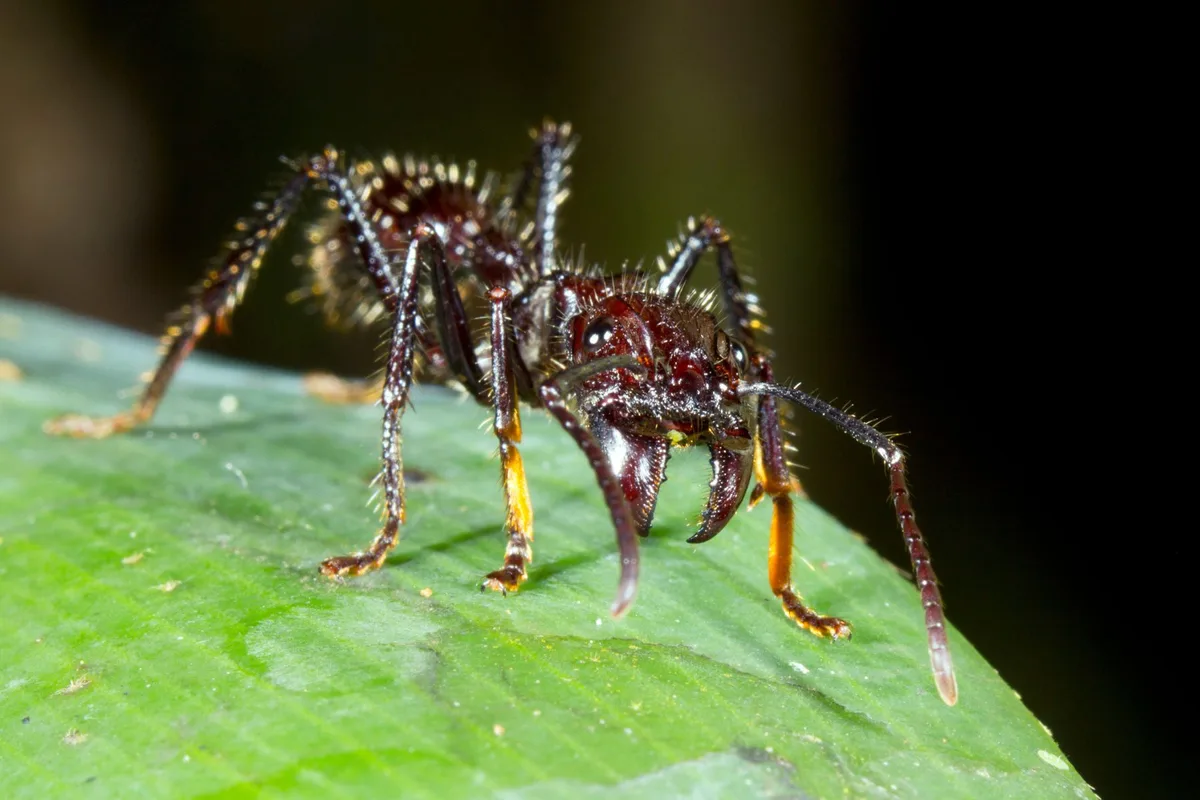
Join our Kids small group Speaking Classes to bring these and other topics to life Book a Free Trial < KIDS NEWS Animals & Environment Next Select a Level Level 1 Level 2 Level 3 Level 4 NEW 27 Jul 2026 Credit: Dr Morley Read via Getty The World's Most Painful Insect: The Rainforest Bullet Ant Warm-up → Read & Listen → Check Understanding → Language → Use It WARM UP Think Ahead: Which detail do you think appears in this story? a) Bullet ants live in cold snow. b) The sting of a bullet ant is extremely painful. c) Bullet ants can fly like birds. Ask: (1) Have you ever seen a real ant? (2) Do you like rainforest animals? VOCABULARY Ant (noun) Forest (noun) Sting (verb) Strong (adjective) Painful (adjective) Protect (verb) A tiny insect that lives in a big group. Example: The ant carries a leaf to its home. A large area with many trees. Example: Many animals live in the warm forest. To hurt someone with a sharp point. Example: The bug can sting if you touch it. Having great power or energy. Example: The ant is small but very strong. Causing hurt or feeling sore. Example: A bee sting is very painful. To keep safe from harm. Example: Ants work together to protect their nest. The bullet ant is a very special insect. It lives in the warm rainforest of South America. This ant is bigger than most ants you see in your garden. It is famous because its sting is extremely painful. People say the sting hurts as much as a tiny bullet. Scientists study this insect to understand how it lives. The ant uses its strong sting to protect its nest from danger. It also hunts small insects for food. Bullet ants live high up in green trees and on the ground. They work together in big groups called colonies. Although their sting hurts a lot, bullet ants do not attack humans unless they feel scared. They are an important part of nature. Scientists want everyone to respect these amazing creatures in the wild. © Getty Images Share Lesson DISCUSSION QUESTIONS 1. Have you ever seen a large ant? 2. How do you feel when you see insects? 3. Why do ants live in colonies? 4. Do you like learning about rainforest animals? 5. What should you do if you see a wild insect? 6. Why is it important to respect nature? BACK TO TOP Unlock All Lessons ($3.99/mo) 🚀 Want more exercises and a worksheet pdf? This content is for premium subscribers and tuition parents only! Subscribe for $3.99/mo to unlock. FILL IN THE GAPS FILL THE GAPS Section 1: Fill in the Gaps Word Bank: insect / nature / painful / protect The bullet ant is a very special _______(1). It lives in the warm rainforest of South America. This ant is bigger than most ants you see in your garden. It is famous because its sting is extremely _______(2). People say the sting hurts as much as a tiny bullet. Scientists study this insect to understand how it lives. The ant uses its strong sting to _______(3) its nest from danger. It also hunts small insects for food. Bullet ants live high up in green trees and on the ground. They work together in big groups called colonies. Although their sting hurts a lot, bullet ants do not attack humans unless they feel scared. They are an important part of _______(4). Scientists want everyone to respect these amazing creatures in the wild. Section 2: Main Idea What is the main idea of the story? a) Bullet ants live in gardens and eat leaves. b) The bullet ant is a rainforest insect with a very painful sting. c) Scientists do not like bullet ants. UNDERSTANDING Section 3: True or False 1. The bullet ant lives in South America. T/F 2. The sting of a bullet ant does not hurt at all. T/F 3. Bullet ants live together in groups called colonies. T/F Section 4: Put Events in Order a) The ant uses its sting to protect its nest. b) Bullet ants live in the warm rainforest. c) Scientists ask people to respect bullet ants in the wild. LANGUAGE Section 5: Vocab Match 1. Insect 2. Forest 3. Painful 4. Protect a) Causing a feeling of hurt b) A small creature with six legs c) To keep something safe from harm d) A large area filled with trees USE IT Section 6: Discussion Builder 1. The bullet ant lives in the rainforest to _______ its home. a) protect b) destroy c) forget 2. Learning about wild animals is very _______. a) boring b) important c) painful Section 7: Sentence Unscramble 1. A: lives / B: The / C: in / D: bullet ant / E: the rainforest 2. A: very / B: Its sting / C: painful / D: is / E: to feel SHOW ANSWERS BACK TO TOP ANSWER KEY Warm Up Answer: b Section 1: Fill in the Gaps insect painful protect nature Section 2: Main Idea b Section 3: True or False True False True Section 4: Put Events in Order Correct order: b, a, c Section 5: Vocab Match b d a c Section 6: Discussion Builder a b Section 7: Sentence Unscramble B D A C E (The bullet ant lives in the rainforest) B D A C E (Its sting is very painful to feel) Section 8: Discussion Questions Student responses will vary. BACK TO TOP Suggest Feature Report an Error Close Thank you for your feedback! SUBMIT Report an error
- The 194-Year-Old Tortoise Reveals Secrets of Ageing | Level Up English Club
Join our Kids small group Speaking Classes to bring these and other topics to life Book a Free Trial < KIDS NEWS Animals & Environment Next Select a Level Level 1 Level 2 Level 3 Level 4 NEW 9 Oct 2026 Jonathan the giant tortoise, the oldest land animal at age 194, is seen on the island of St. Helena. St Helena Government The 194-Year-Old Tortoise Reveals Secrets of Ageing Warm-up → Read & Listen → Check Understanding → Language → Use It WARM UP Section: Warm Up Think Ahead: Which detail do you think appears in this story? a) A giant tortoise is almost two hundred years old. b) Scientists found a magic potion on an island. c) The tortoise can fly across the ocean. Ask: (1) What is your favourite animal in the zoo? (2) How do you keep your body healthy and strong? VOCABULARY tortoise (/ˈtɔːtəs/ , noun) Meaning: A slow-moving land animal that has a hard shell on its back. Example: The big tortoise walked slowly on the green grass. island (/ˈaɪlənd/ , noun) Meaning: A piece of land that has water all around it. Example: They live on a sunny island near the blue sea. scientist (/ˈsaɪəntɪst/ , noun) Meaning: A person who studies how the natural world works. Example: The scientist looked into the microscope to check the cells. DNA (/ˌdiː en ˈeɪ/ , noun) Meaning: Tiny instructions inside every living body that make it unique. Example: Scientists study DNA to learn secrets about animals. cell (/sel/ , noun) Meaning: A very small building block of all living things. Example: Every plant and animal is made of millions of tiny cells. healthy (/ˈhelθi/ , adjective) Meaning: Being strong, well, and free from sickness. Example: Eating fresh vegetables helps you stay strong and healthy. Meet Jonathan. He is a very old tortoise. He lives on a sunny island named Saint Helena. Jonathan is one hundred and ninety-four years old. He is the oldest land animal in the entire world. People love him very much. Recently, smart scientists wanted to know his big secret. Why does he live for so long? They took a small sample of his skin to look at his DNA. DNA is like a tiny instruction book inside every living body. The scientists made a big surprise discovery. They looked at his tiny cells and energy parts. His cells look very young and fresh. They do not look old like other old animals. His body fights against getting tired or weak. Jonathan likes to walk on the green grass. He eats fresh vegetables every single day. The friendly animal hears his keeper calling his name. He walks slowly towards the tasty food. Scientists hope this study helps us understand how bodies grow and stay healthy. Jonathan is a very special reptile. He makes people happy every day. A photo taken in 1882 when Jonathan (left) arrived in St. Helena. A.L. Innes Jonathan (left) with another giant tortoise named David. Joe Hollins Share Lesson DISCUSSION QUESTIONS 1. How old is Jonathan the tortoise? 2. Where does Jonathan live? 3. What do scientists study to find his secret? 4. What do Jonathan's cells look like? 5. What food does Jonathan like to eat? BACK TO TOP Unlock All Lessons ($3.99/mo) 🚀 Want more exercises and a worksheet pdf? This content is for premium subscribers and tuition parents only! Subscribe for $3.99/mo to unlock. FILL IN THE GAPS FILL THE GAPS Section 1: Fill in the Gaps Word Bank: cell, DNA, island, tortoise Meet Jonathan. He is a very old _______(1). He lives on a sunny _______(2) named Saint Helena. Jonathan is one hundred and ninety-four years old. He is the oldest land animal in the entire world. People love him very much. Recently, smart scientists wanted to know his big secret. Why does he live for so long? They took a small sample of his skin to look at his _______(3). DNA is like a tiny instruction book inside every living body. The scientists made a big surprise discovery. They looked at his tiny cells and energy parts. His cells look very young and fresh. They do not look old like other old animals. His body fights against getting tired or weak. Jonathan likes to walk on the green grass. He eats fresh vegetables every single day. The friendly animal hears his keeper calling his name. He walks slowly towards the tasty food. Scientists hope this study helps us understand how bodies grow and stay healthy. Jonathan is a very special reptile. He makes people happy every day. Section 2: Main Idea Choose the best main idea for the story: a) Jonathan is a young dog who loves running fast. b) Jonathan is a very old tortoise and scientists study his young-looking cells. c) Jonathan lives in a cold snow mountain. UNDERSTANDING Section 3: True and False 1. Jonathan lives on an island named Saint Helena. T/F 2. Jonathan is ten years old. T/F 3. Scientists discovered his cells look very young. T/F Section 4: Put Events in Order Number these events from 1 to 3 in the correct order: ____ Scientists take a small sample to look at his DNA. ____ Jonathan walks slowly on the green grass to eat food. ____ People celebrate Jonathan as the oldest land animal. LANGUAGE Section 5: Vocab Match 1. tortoise 2. island 3. scientist 4. cell 5. healthy a. A tiny building block of living things b. Strong and free from sickness c. A slow-moving animal with a shell d. Land with water all around it e. A person who studies nature USE IT Section 6: Discussion Builder 1. Jonathan is a very old _______ (a) cat / b) tortoise). 2. He eats fresh _______ (a) vegetables / b) rocks) every day. Section 7: Sentence Unscramble 1. Unscramble the sentence: A) is / B) Jonathan / C) old / D) very / E) tortoise / . 2. Unscramble the sentence: A) green / B) on / C) grass / D) walks / E) He / . SHOW ANSWERS BACK TO TOP ANSWER KEY Answer Key Warm Up Answer: a) A giant tortoise is almost two hundred years old. Section 1: Fill in the Gaps (1) tortoise (2) island (3) DNA (4) healthy Section 2: Main Idea b) Jonathan is a very old tortoise and scientists study his young-looking cells. Section 3: True and False 1. T 2. F 3. T Section 4: Put Events in Order 3, 2, 1 (Correct order: People celebrate... -> Scientists take... -> Jonathan walks...) Section 5: Vocab Match 1 - c, 2 - d, 3 - e, 4 - a, 5 - b Section 6: Discussion Builder 1. b) tortoise 2. a) vegetables Section 7: Sentence Unscramble 1. Jonathan is a very old tortoise. 2. He walks on green grass. Section 8: Discussion Questions 1. Jonathan is one hundred and ninety-four years old. 2. He lives on the sunny island of Saint Helena. 3. Scientists study his DNA and tiny cells. 4. His cells look very young and fresh. 5. Jonathan likes to eat fresh vegetables. BACK TO TOP Suggest Feature Report an Error Close Thank you for your feedback! SUBMIT Report an error
- How Ancient Egyptians Built the Great Pyramids Using River Power | Level Up English Club
Join our Kids small group Speaking Classes to bring these and other topics to life Book a Free Trial < KIDS NEWS History Next Select a Level Level 1 Level 2 Level 3 Level 4 NEW 11 Sept 2026 Image credit: Phil Wright/Getty Images How Ancient Egyptians Built the Great Pyramids Using River Power Warm-up → Read & Listen → Check Understanding → Language → Use It WARM UP Think Ahead: Which detail do you think appears in this story? a) Ancient workers used huge rivers to move heavy rocks. b) Aliens built the pyramids with laser beams. c) The pyramids were built under the sea. Ask: (1) Have you ever seen a picture of a pyramid? (2) How do you move very heavy things at home or school? VOCABULARY pyramid (/ˈpɪr.ə.mɪd/ , noun) Meaning: A giant stone building with triangle sides built in ancient Egypt. Example: The pyramid is very big and very old. river (/ˈrɪv.ər/ , noun) Meaning: A long line of water that moves across the land. Example: Boats travel on the wide river. heavy (/ˈhev.i/ , adjective) Meaning: Something that weighs a lot and is hard to lift. Example: The large stone is too heavy to lift. stone (/stəʊn/ , noun) Meaning: A hard piece of rock from the ground. Example: Workers use big stone blocks to build walls. boat (/bəʊt/ , noun) Meaning: A small vehicle that travels on top of water. Example: The boat carries people across the water. desert (/ˈdez.ət/ , noun) Meaning: A hot, dry land with lots of sand and little water. Example: It is very hot and dry in the desert. The Great Pyramids of Egypt are very old and big. Long ago, ancient workers built them in the dry desert. Scientists wondered about these giant buildings for a long time. How did workers move so many heavy stone blocks without modern machines? Now, clever scientists have found an exciting answer. A long time ago, a deep river flowed near the pyramids. Workers used boats on this river to carry big stone blocks easily. The moving water carried the heavy rocks close to the building site. Today, that old river branch is completely dry and covered in sand. Scientists used space satellites and radar images to find the hidden riverbed under the ground. This discovery shows that ancient people were very smart engineers. They used natural water power to construct amazing monuments that still stand today. Four-ramp parallel IER configuration (3D render). Image credit: npj Heritage Science (npj Herit. Sci.) Share Lesson DISCUSSION QUESTIONS (1) Would you like to visit the pyramids in Egypt? (2) Why is water helpful when carrying heavy things? (3) What tools do we use today to move heavy rocks? (4) How do you feel when you discover a hidden secret? (5) Which ancient building do you think is the coolest? BACK TO TOP Unlock All Lessons ($3.99/mo) 🚀 Want more exercises and a worksheet pdf? This content is for premium subscribers and tuition parents only! Subscribe for $3.99/mo to unlock. FILL IN THE GAPS FILL THE GAPS Section 1: Fill in the Gaps Word Bank: boat, desert, heavy, stone The Great Pyramids of Egypt are very old and big. Long ago, ancient workers built them in the dry _______(1). Scientists wondered about these giant buildings for a long time. How did workers move so many _______(2) stone blocks without modern machines? Now, clever scientists have found an exciting answer. A long time ago, a deep river flowed near the pyramids. Workers used a _______(3) on this river to carry big _______(4) blocks easily. The moving water carried the heavy rocks close to the building site. Section 2: Main Idea What is the main idea of this text? a) Scientists built a new pyramid in Egypt using big boats. b) Ancient workers used a lost river to move heavy stones for pyramids. c) The desert in Egypt has no sand today. UNDERSTANDING Section 3: True or False (1) The pyramids were built in a dry desert long ago. T/F (2) Workers used modern trucks to carry giant stones. T/F (3) Scientists found a lost river under the dry sand. T/F Section 4: Put Events in Order Number the sentences from 1 to 3 to show the order of events: ( ) The old river branch dried up and was covered by sand. ( ) Ancient workers used a river to sail heavy stone blocks to the site. ( ) Scientists found the hidden riverbed using modern space satellites. LANGUAGE Section 5: Vocab Match (1) pyramid (2) river (3) heavy (4) desert (5) stone a) A hot, dry place filled with sand. b) A giant triangular building in Egypt. c) A hard piece of rock from the ground. d) Moving water that flows across land. e) Weighing a lot; difficult to lift. USE IT Section 6: Discussion Builder (1) Ancient workers used a _______ to move stone blocks on the river. a) boat b) bicycle (2) The pyramids stand in a hot and dry _______. a) forest b) desert Section 7: Sentence Unscramble (1) Unscramble these parts to form a full sentence: A) in the desert / B) Ancient workers / C) built giant / D) pyramids / E) long ago (2) Unscramble these parts to form a full sentence: A) carried heavy / B) The water / C) close to / D) stone blocks / E) the site SHOW ANSWERS BACK TO TOP ANSWER KEY Warm Up Think Ahead Answer: a) Ancient workers used huge rivers to move heavy rocks. Section 1: (1) desert, (2) heavy, (3) boat, (4) stone Section 2: b Section 3: (1) True, (2) False, (3) True Section 4: 2, 1, 3 Section 5: (1)-b, (2)-d, (3)-e, (4)-a, (5)-c Section 6: (1) a, (2) b Section 7: (1) B-C-D-A-E (Ancient workers built giant pyramids in the desert long ago.), (2) B-A-D-C-E (The water carried heavy stone blocks close to the site.) Section 8: Open discussion; teacher checks student oral responses. BACK TO TOP Suggest Feature Report an Error Close Thank you for your feedback! SUBMIT Report an error
- Walking Safaris in Zambia Offer a Quiet Way to See Wildlife | Level Up English Club
Join our Kids small group Speaking Classes to bring these and other topics to life Book a Free Trial < KIDS NEWS Animals & Environment Next Select a Level Level 1 Level 2 Level 3 Level 4 NEW 13 Aug 2026 (Credit: Barbara Noe Kennedy) Walking Safaris in Zambia Offer a Quiet Way to See Wildlife Warm-up → Read & Listen → Check Understanding → Language → Use It WARM UP Think Ahead: Which detail do you think appears in this story? a) Visitors riding in helicopters b) Visitors walking through nature with a guide c) Visitors staying inside a museum Ask: (1) Have you ever seen a wild animal up close? (2) Would you like to go on a walking trip in nature? VOCABULARY safari (noun) /səˈfɑː.ri/ guide (noun) /ɡaɪd/ track (verb) /træk/ nature (noun) /ˈneɪ.tʃə/ quiet (adjective) /ˈkwaɪ.ət/ footprint (noun) /ˈfʊt.prɪnt/ a trip to see wild animals in nature Example: The family went on an exciting safari in Africa. a person who shows visitors the way safely Example: Our guide showed us where the lions live. to follow marks or signs made by an animal Example: We can track the elephant in the soft dirt. plants, animals, and the world outdoors Example: It is peaceful to walk in nature. making very little noise Example: Please stay quiet so the birds do not fly away. a mark made by a foot on the ground Example: I saw a big lion footprint in the mud. Zambia is a country in Africa. It is famous for its special wildlife safaris. Many visitors go to South Luangwa National Park. In most places, people ride in large trucks to look at wild animals. However, in Zambia, people like to go on a walking safari. This means they walk through the bushes with an expert guide. Walking through the park is very exciting. The trained guide teaches visitors how to track big animals safely. You can look for footprints in the dirt. You can see big elephants, tall giraffes, and sleeping lions. Walking lets you feel close to nature. Everyone stays quiet so they do not scare the animals. The guide carries safety tools and knows the park well. Walking safaris started in Zambia many years ago. Today, children and families visit to learn about nature protection. It is a wonderful way to see Africa's amazing wild animals on foot. White rhinos are slowly returning to Zambia, thanks in part to slow tourism (Credit: Barbara Noe Kennedy) Share Lesson DISCUSSION QUESTIONS 1. Would you like to go on a walking safari in Zambia? Why or why not? 2. What wild animals would you like to see on foot? 3. Why is it important to have a guide when walking in a forest or park? 4. What is your favourite wild animal? 5. How can children help protect nature and animals? BACK TO TOP Unlock All Lessons ($3.99/mo) 🚀 Want more exercises and a worksheet pdf? This content is for premium subscribers and tuition parents only! Subscribe for $3.99/mo to unlock. FILL IN THE GAPS FILL THE GAPS Section 1: Fill in the Gaps Word Bank: footprints, guide, safaris, track Zambia is a country in Africa. It is famous for its special wildlife _______(1). Many visitors go to South Luangwa National Park. In most places, people ride in large trucks to look at wild animals. However, in Zambia, people like to go on a walking safari. This means they walk through the bushes with an expert _______(2). Walking through the park is very exciting. The trained guide teaches visitors how to _______(3) big animals safely. You can look for _______(4) in the dirt. You can see big elephants, tall giraffes, and sleeping lions. Section 2: Main Idea What is the main idea of this article? a) People only visit Zambia to ride in big trucks. b) Zambia is famous for guided walking safaris in nature. c) Wild animals in Zambia prefer to live in cities. UNDERSTANDING Section 3: True or False (1) South Luangwa National Park is located in Zambia. T/F (2) Visitors go on walking safaris without a guide. T/F (3) Staying quiet helps prevent scaring the wild animals. T/F Section 4: Put Events in Order Put these events in the correct order (1-3): [ ] Visitors look for animal footprints in the dirt. [ ] Visitors meet their expert guide before walking into the park. [ ] Visitors learn about nature protection at the end of their visit LANGUAGE Section 5: Vocab Match 1. safari 2. guide 3. rhino 4. footprint 5. protect a) A large animal with thick skin and horns. b) A mark left in the dirt by a foot. c) To keep animals safe from danger. d) A trip to look at wild animals. e) A person who shows visitors where to walk. USE IT Section 6: Discussion Builder (1) When walking in the park, visitors must stay _______ and follow the guide. a) noisy b) quiet c) fast (2) The guide shows visitors how to spot animal _______ in the dirt. a) trucks b) footprints c) houses Section 7: Sentence Unscramble (1) A - Zambia / B - for / C - is / D - walking safaris / E - famous (2) A - Guides / B - track / C - how to / D - teach visitors / E - animals SHOW ANSWERS BACK TO TOP ANSWER KEY Warm Up Answer: b Section 1: Fill in the Gaps (1) safaris (2) guide (3) track (4) footprints Section 2: Main Idea b) Zambia is famous for guided walking safaris in nature. Section 3: True or False (1) True (2) False (3) True Section 4: Put Events in Order [2] Visitors look for animal footprints in the dirt. [1] Visitors meet their expert guide before walking into the park. [3] Visitors learn about nature protection at the end of their visit. Section 5: Vocab Match 1 - c 2 - b 3 - e 4 - d 5 - a Section 6: Discussion Builder (1) b (2) b Section 7: Sentence Unscramble (1) A - C - E - B - D (Zambia is famous for walking safaris) (2) A - D - C - B - E (Guides teach visitors how to track animals) Section 8: Discussion Questions (1) Zambia is famous for walking safaris. (2) Visitors can see elephants, giraffes, and lions. (3) They stay quiet so they do not scare the animals. (4) Answers will vary (e.g. Walking allows you to feel closer to nature). (5) Protecting animals keeps natural habitats safe for the future. BACK TO TOP Suggest Feature Report an Error Close Thank you for your feedback! SUBMIT Report an error